
Nuclear talks between the US and Iran are taking place in Geneva, Switzerland, and Trump is expected to “indirectly” participate.
This is reported by CNN.
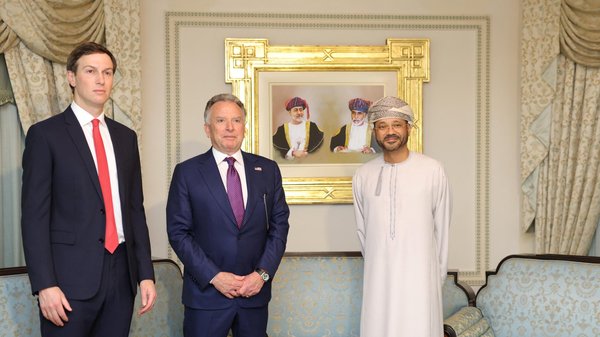
The talks between the United States and Iran in Geneva are being led by President Donald Trump's envoy Steve Witkoff and his son-in-law Jared Kushner on the US side.
Trump also said he would “indirectly” participate in negotiations with Iranian officials.
On the Iranian side, the delegation is headed by Foreign Minister Abbas Araghchi.
The negotiations are indirect, mediated by Omani Foreign Minister Badr Albusaidhi.
The IRNA news agency reported that the American and Iranian delegations were at the event and that “the exchange of messages through the Omani side has actually begun.” It said the American delegation spoke with Albusaidi and conveyed the US's views on Iran.
Iran's Tasnim news agency reported that Iran's demand is for the “complete lifting” of sanctions and building confidence in Tehran's “peaceful nuclear program.”
CNN notes that at the heart of the negotiations is Iran's desire to lift long-standing Western sanctions that have significantly damaged its economy, deepened public discontent, and increased pressure on the regime.
Last month, mass protests erupted in Iran over the poor state of the economy, with many demonstrators openly calling for the end of the Islamic Republic.
Tehran is also keen to avoid another round of US and Israeli military strikes, which – amid the current build-up of US air and naval forces in the region – could threaten the regime’s stability and survival.
Meanwhile, the US seeks to dismantle Iran's nuclear program, impose restrictions on its ballistic missiles and limit support for regional proxies that continue to threaten Washington's allies, including Israel and the Gulf Arab states.
On the eve of the latest talks, Iran declared its openness to discussing limits on its nuclear activities, reserving the right to enrich uranium, but strongly rejected any negotiations on its ballistic missiles or regional alliances.
Trump has said that the talks could focus exclusively on the nuclear issue, while simultaneously threatening military action and the deployment of massive air and naval forces in the Middle East.
Israeli Prime Minister Benjamin Netanyahu has expressed doubts about the possibility of a successful nuclear deal with Iran.
He said Trump is “determined to use every opportunity to reach a deal,” believing that the current circumstances and increased pressure on Tehran could lead to a breakthrough.
“I will not hide from you that I express my skepticism about any deal with Iran, because, frankly, Iran can only be trusted in one thing: they lie,” Netanyahu said.
The US previously warned of a worsening security situation in Iran amid internet shutdowns, transport disruptions, and mass restrictions on air travel, and recommended that Americans leave the country if possible.
The US has deployed thousands of troops, an aircraft carrier, warships, fighter jets and tanker planes to the Middle East. On February 3, the US military shot down an Iranian drone that “aggressively approached” the aircraft carrier Abraham Lincoln in the Arabian Sea. That same day, Islamic Revolutionary Guard Corps boats approached an American tanker in the Strait of Hormuz and threatened to seize it.
What is happening in Iran?
Protests in Iran began on December 28 in response to skyrocketing prices and the devaluation of the national currency, and then turned against the theocratic government that has ruled the country since the 1979 Islamic Revolution.
US President Donald Trump supported the protests and threatened to help the protesters if the protests and oppression against them continued, he said that the US “will be on combat alert.” Khamenei responded that Iran “will not yield to the enemy.” The US imposed new sanctions on Iran and deployed an aircraft carrier strike group to the Middle East.
The son of the last Shah of Iran, Reza Pahlavi, called on Iranians to seize state institutions inside the country, the diaspora to replace the flags of the Islamic Republic with national ones at embassies, and Iran's security forces to join the protesters. Pahlavi promised to abandon the nuclear program and recognize Israel if the Khamenei regime falls.
Poland, the US and Sweden have urged their citizens to leave Iran, France has evacuated some diplomats. Britain has imposed new sanctions on Iran and temporarily closed its embassy in Tehran. Ukraine has also closed its embassy.
Iranian authorities have confirmed the deaths of 5,000 people during the protests. Human rights group HRANA reported 3,308 confirmed deaths and over 24,000 arrests, with another 4,382 cases under investigation.
At the same time, unverified estimates are emerging — from 2,000 to 20,000 dead. Verification of this data is complicated by a complete nationwide internet shutdown: since the evening of January 8, according to NetBlocks, 99% of internet connections in Iran have been blocked, effectively making independent access to information impossible.
On January 28, Trump called on Iran to come to the negotiating table to reach a nuclear weapons deal and warned that US warships had already entered the region and were ready for a “fast and hard” strike.
The deputy commander-in-chief of the Iranian army, Rear Admiral Habibollah Sayyari, stated that any attempts by the American military to strike targets in Iran would result in significant losses for the United States.