
Main points
- In 1976, NASA's Viking mission may have accidentally destroyed Martian microorganisms during chemical soil tests, detecting radioactive carbon dioxide, indicating possible life.
- Modern research suggests that microbes may have died from excess water, and calls for a review of old data as preparations for manned missions to Mars continue.
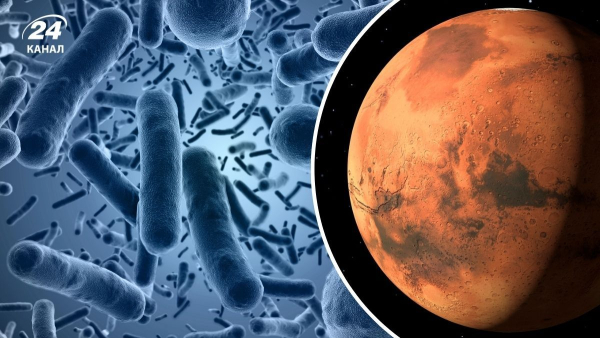
It looks like Viking did find life on Mars in 1976 / Collage by Channel 24
Humanity may have encountered alien life as early as 1976, but that encounter ended tragically for the “Martians” themselves. A new analysis of data from the Viking mission suggests that the spacecraft not only detected signs of microorganisms, but also accidentally destroyed them during chemical tests.
Now scientists are calling for a review of the results of the experiments to avoid similar mistakes in the future. The issue is becoming critical now, as humanity prepares manned flights to Mars and plans to deliver soil samples to Earth, which requires a clear understanding of what we may encounter, IflScience reports.
What is this story and could we really find life on Mars?
In July and September 1976, two NASA Viking landers made historic landings on the surface of Mars. In addition to the first detailed images of the desert landscape, the spacecraft conducted a series of biological tests of the Martian soil, looking for signs of active or ancient life. The results were so mixed that they have been a source of controversy among astrobiologists for decades.
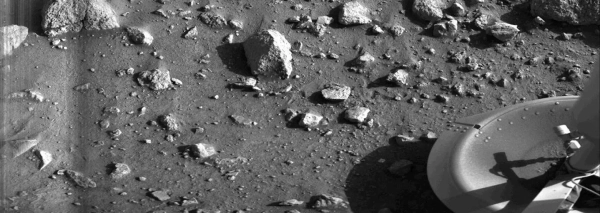
The first photo in human history of the surface of Mars was taken by the Viking 1 spacecraft after landing / NASA photo
Viking journey to Mars – watch the video:
One key experiment involved adding water with nutrients and radioactive carbon to the soil. The idea was simple: if there were microbes in the soil, they would absorb the food and release a radioactive gas that would be detected by sensors.
How did the experiment go?
The first test at the Viking 1 landing site was 99.7% positive. A significant release of radioactive carbon dioxide and oxygen was detected, indicating active metabolism. Professor Dirk Schulze-Makuch notes that by the preponderance of the evidence, Viking did indeed find microbial life on Mars. However, subsequent attempts to add a dose of nutrients failed to elicit a second response.
Although the first test at the Viking 1 landing site in Krys gave a positive result for organic synthesis (with a probability of 99.7% compared to the control sample), subsequent tests did not give clear results,
– the scientist noted.
In addition, the instruments recorded chlorinated organic compounds, which scientists at the time perceived as terrestrial pollution brought by the spacecraft itself.
The then mission director, Gerald Soffen, declared: “no organics, no life.” Most of the scientific community agreed with this conclusion, attributing the first positive results to the action of aggressive chemicals in the soil, such as perchlorates.
Why are we talking about life on Mars again?
That changed in 2009, when the Phoenix rover confirmed that perchlorates are a natural part of Martian soil. Experiments in 2010 showed that heating organic matter with perchlorates (as Viking did) produced the same chlorinated compounds seen in 1976. This meant that the organic molecules on Mars were real, not “contamination” from Earth.
Why then did the microbes not respond to the second portion of water?
The answer may lie in the experience of studying the Atacama Desert on Earth. Microorganisms adapted to extreme drought die from excess water. Perhaps Viking simply “drowned” the Martian flora during the test, which is why repeated measurements no longer recorded signs of life.
The current theory, outlined in the work of scientists and published in the Astrobiology Journal, suggests the existence of BARSOOM organisms – bacterial autotrophs that breathe oxygen accumulated on Mars.
Interesting fact! The authors of the study borrowed the name BARSOOM from Edgar Rice Burroughs' science fiction novel “A Princess of Mars.” In the book, “Barsoom” is the proper name for the planet Mars, used by its indigenous inhabitants.
They can be dormant and instantly activate when minimal moisture and energy are present, absorbing carbon dioxide to create organic matter.
Although scientists do not claim that this is definitive proof, they insist on reviving the debate, as humanity soon plans to send manned missions to Mars and return soil samples to Earth.
It should be noted that if NASA had officially confirmed the existence of life on Mars in 1976, NASA's space program today might look different and it would definitely have influenced the technologies we use today. Who knows, maybe humanity would have had a stable presence on Mars by now, either in the form of a colony or regular manned missions.