
Main points
- Fraudsters often use international codes and unusual combinations of numbers to disguise themselves as regular numbers.
- Particular caution should be exercised when calling from short numbers and via instant messengers, as these may be fraud attempts.
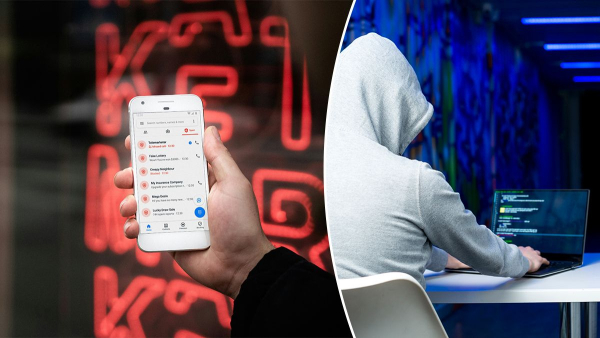
Dangerous calls to a smartphone: how to recognize scammers by the number code / Collage of Channel 24
Phone calls have never been a guarantee of live and secure communication, but things have become even worse in the era of modern technology and artificial intelligence. Thanks to Internet telephony and number spoofing, scammers can easily disguise themselves as regular or even familiar contacts. But often it is the numbers on the screen that can tell you whether to pick up the phone or ignore the call.
What numbers in a number can give away scammers?
You can recognize a dangerous call even before you answer it if you carefully look at the format and code of the number. One of the key signals is the international code. After the “+” sign, the country from which the call is supposedly coming is always indicated. For Ukraine, this is +380. If a foreign code appears on the screen, and there are no acquaintances abroad among your contacts, such a call should be treated with caution. In addition to the risk of fraud, such calls may be billed as international, writes 24 Kanal .
A separate category is calls from landline numbers in Kyiv with the code +380 44. Formally, these are ordinary landline phones in the capital, but in practice, this code is increasingly being used by spammers and scammers. If you do not live in Kyiv or the region and do not have business there, the probability of a useful call is minimal, considering that few people use landline phones today.
In Ukraine, mobile operator codes are clearly defined. For Kyivstar, these are +380 67, 68, 96, 97, 98 and 77, for Vodafone – +380 50, 66, 95, 99 and 75, for Lifecell – +380 63, 73 and 93.
If the number looks atypical or has a strange combination of digits that is not associated with any operator, this may be a sign of spoofing or internet telephony, which is actively used by scammers.
Another red flag is short numbers. Although banks, mobile operators, or large services often call from them, scammers have learned to imitate such formats. If you were not expecting a call and do not have active applications to institutions, you should not answer.
Be careful, messengers
Calls via messengers deserve special attention. In Viber or Telegram, scammers often call from unknown or disposable accounts, leaving no messages. This method allows you to quickly disappear after an unsuccessful contact attempt, so it is better not to answer without checking.
Given this, it makes sense to block calls from unknown numbers altogether. You can do this in your messenger's privacy settings.
Be careful.
Experts advise to remember that scammers are increasingly masquerading as “regular” Ukrainian numbers. That is why it is worth evaluating not only the code, but also the context – whether you were expecting the call, whether it has a logical explanation.
Attention to detail helps avoid situations where one careless call could cost money or personal data.