
Main points
- NASA has allowed astronauts to take modern smartphones on space missions, starting with Crew-12 and Artemis II.
- This step accelerates the certification of modern technology for space exploration, in particular, for future missions to orbit and the Moon.
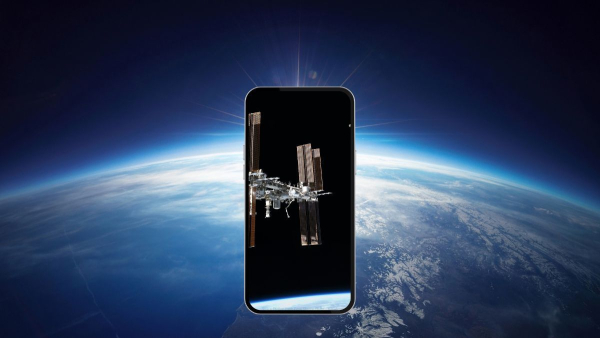
NASA astronauts allowed to take smartphones into space / Collage of Channel 24
NASA has officially allowed participants in space missions to carry modern smartphones with them. The Crew-12 and Artemis II crews will be the first to receive this opportunity. This will allow astronauts to capture important moments for their loved ones faster and easier, as well as share unique shots with the world in a more familiar format.
The aerospace agency has decided to speed up the certification procedure for modern equipment for space travel, TechCrunch reports.
How was everything before and what has changed?
Previously, astronauts relied on decade-old Nikon DSLRs and GoPros , which, while reliable, lack the flexibility and spontaneity of mobile phones. Now, crews will have the latest Android and iOS devices at their fingertips, allowing them to take wide-angle selfies or even create social media content directly in zero gravity.
NASA Administrator Jared Isaacman emphasized that such a move will help teams capture special moments for loved ones and create inspiring videos for people on Earth.
But there is another important point for NASA – Isaacman emphasized that from now on, speed in approving new technology is a useful priority for future scientific research in orbit and on the surface of the Moon. So smartphones are just the beginning, and we should most likely expect the space agency to now certify modern technology for work in space more quickly.
Why does NASA use outdated technology in space?
It's about space threats to technology and astronauts. First of all, all devices sent into orbit or to another planet must be protected from space radiation.
Since they must be reliable, these are often old but proven and specially prepared technologies and samples of equipment.
In addition, it is not uncommon for such systems to be duplicated so that the device retains its operating characteristics if one of the components fails.
For example, until recently, NASA used extremely outdated, from a technological point of view, processors for space computers, as their special modifications were created to withstand radiation and other threats – this is what QUARTZ tells us. Such traditional processors, although very reliable, are extremely slow, and NASA decided to change its approach.
For example, the first Martian helicopter, Ingenuity, was equipped with a Snapdragon Flight processor based on the Snapdragon 801 chip. The device successfully completed 72 flights , although the initial mission was only one flight, and then the goal was set for 5 flights. The processor was responsible for complex autonomous real-time navigation.
The first private spacecraft, Odysseus, which landed on the Moon in 2024, was equipped with a Snapdragon 8 Gen 2 processor for on-board data processing.
When will astronauts be able to take smartphones into orbit?
But back to smartphones in space . SpaceX has already allowed them to be used on private missions. However, this will be the first time that NASA has allowed them on public flights.
-
The next Crew-12 launch to the International Space Station is scheduled for February 11, 2026, NASA reports.
-
The Artemis II mission, which will put humans around the Moon for the first time since the 1960s, has now been postponed to March due to a problem with a key test of the SLS rocket.