
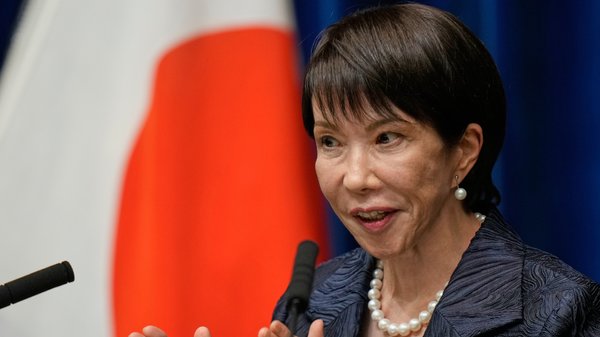
The ruling Liberal Democratic Party (LDP) of current Japanese Prime Minister Sanae Takaichi, together with the smaller partner party Japan Innovation, wins more than two-thirds of the seats in the lower house of parliament.
This is reported by the Japanese publication NHK and Reuters.
The LDP is expected to win at least 310 seats in the lower house of parliament, giving the party the ability to overcome a veto in the upper house and paving the way for constitutional changes.
Sanae Takaichi herself has said she has no plans to change the composition of the government, which has been in office for only three months. She has emphasized the priority of cutting the consumption tax and called for the creation of an inter-party forum for faster discussion on the issue.
Meanwhile, the largest opposition party, the Centrist Reform Alliance, could lose about half of its seats. Some key politicians, including veteran lawmaker Ozawa Ichiro, have already lost their districts. Alliance leaders said they were taking the results “seriously and humbly” and were preparing for internal consultations.
As the BBC reported, against the backdrop of the Liberal Democratic Party's victory party led by Takaichi , on Monday morning, February 9, Japanese stocks rose to a record high after the markets opened. Thus, the Nikkei index Japan's leading stock index, which reflects the average share price of the 225 largest and most active companies traded on the Tokyo Stock Exchange, rose by more than 5% in early trading, briefly crossing the 57,000-point mark, which indicates the total value of shares of companies listed on the Tokyo Stock Exchange.
Sanae Takaichi's Liberal Democratic Party (LDP) has governed Japan almost continuously since 1955. It currently holds 199 seats in the House of Representatives.
What preceded this?
On January 19, Japanese Prime Minister Sanae Takaichi announced the dissolution of the lower house and the holding of snap elections.
A nationwide election for the 465 lower house members was set for February 8. Takaichi called the decision “extremely important” and one that would determine the future course of Japan together with the people.