
OpenAI is contemplating a move to fund pharmaceutical firms that employ its AI in drug creation in return for a percentage of future sales. This would offset computational expenses and secure a portion of forthcoming breakthroughs.
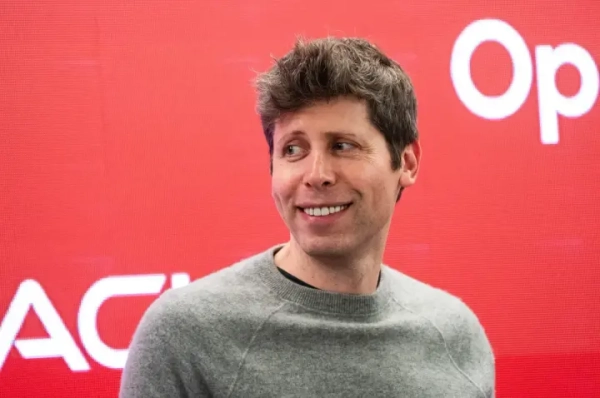
OpenAI’s Chief Executive, Sam Altman, communicated that the firm is evaluating a shift towards a paradigm of directly backing pharmaceutical organizations that leverage its technology to formulate novel medications. While addressing a Cisco Systems Inc. gathering in San Francisco on February 3, the leading figure of the ChatGPT creators articulated that such a method would enable the company to recuperate its substantial computing expenditures in exchange for a cut of prospective scientific innovations. UNN announces.
Details
Sam Altman implied that OpenAI might financially support the utilization of its cutting-edge AI models for medical collaborators, in return for a percentage from patents or the marketing of pharmaceuticals identified through AI.
While no official collaborations of this nature are presently in place, Altman highlighted that extensive scientific investigations necessitate such a significant amount of funds that OpenAI perceives itself as a key backer.
A fresh tactic for income generation from AI
The CEO’s remarks align with recent pronouncements from the company’s CFO, Sarah Friar, during the Davos summit, where she alluded to a “value sharing” arrangement, where OpenAI would obtain a fraction of the earnings derived from intellectual properties fashioned utilizing its software.
We aren’t currently engaged in such activities, yet I anticipate that the cutting edge of scientific exploration with artificial intelligence will demand such considerable resources that, in certain instances, we’ll consider ourselves as an investor.
– said Altman.
Concurrently, he guaranteed that these advancements will not impact typical clientele who employ the API for standard applications, stressing that their creations remain entirely their possession. At present, OpenAI is vying with Google and Anthropic for dominance in the medical domain, where AI is actively deployed to scrutinize molecules and handle individual health information.