
Investigators at the Wistar Institute have engineered an experimental HIV vaccine which triggers neutralizing antibodies following a solitary immunization in primates. This method might considerably streamline immunization schedules and enhance their availability.
Researchers from the Wistar Institute have crafted an experimental HIV vaccine that presents a previously unseen outcome: the generation of neutralizing antibodies directed at HIV following just one dose in primates, according to Medical Xpress, reports UNN .
The groundbreaking strategy, detailed in the journal Nature Immunology, could reportedly drastically reduce the length and complexity of HIV immunization plans, thereby increasing global access.
An Adventurous New Immunization Approach
The investigation, steered by Amelia Escolano, PhD, associate professor within the Wistar Institute’s Center for Vaccines and Immunotherapy and leading author of the research, is centered on a synthetically constructed HIV envelope protein, WIN332, which challenges conventional scientific assumptions on creating a successful HIV vaccine, the article indicates.
“Contrary to general opinion in this domain, we attained modest neutralization following only one injection, with further amplification upon administration of an additional booster dose, an observation never recorded before,” Escolano mentioned.
“Typically, HIV immunization programs demand seven, eight or even ten doses to observe preliminary neutralization. With our immunogen WIN332, a single administration already induced some neutralization,” she highlighted.
Influence on the V3-glycan Area
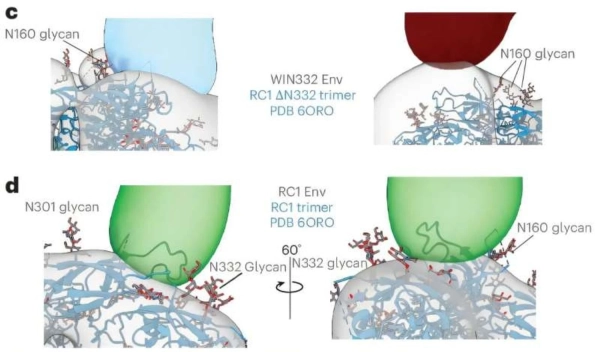
For many years, researchers endeavoring to create HIV vaccines have prioritized targeting the viral envelope protein, a component of the virus’s exterior layer. Dr. Escolano’s group engineered a distinct segment of the envelope protein known as the V3-glycan epitope.
Antibodies aimed at this region were considered to necessitate a particular sugar, the N332 glycan, for robust binding. Past envelope immunogens were invariably crafted to preserve this sugar. Escolano’s group implemented the unparalleled measure of entirely eliminating the N332 glycan to produce WIN332.
“A single injection of WIN332 elicited minor yet noteworthy neutralization against HIV within merely three weeks—an unprecedented duration. Upon administering a subsequent injection utilizing a related immunogen, the degree of neutralization significantly increased. This potentially signifies a considerable stride forward compared to current experimental protocols,” the article states.
“This immunogen has the potential to shorten and simplify vaccination procedures,” expressed Ignacio Relano-Rodriguez, PhD, primary author of the research. “If this approach is fruitful, we may be able to accomplish the intended immunity with just three doses. This would result in shorter and more accessible vaccination schedules.”
Forthcoming Steps Towards Human Clinical Assessments
These promising outcomes have garnered the interest of premier health bodies, who intend to move forward with human clinical evaluations of WIN332. Meanwhile, further preclinical investigations are ongoing, along with the creation of additional immunogens suitable for deployment within a reduced vaccination series to augment neutralization potency even further, the article reports.