
Main points
- The Tax Service has identified 10 well-known retail chains that used “business splitting” schemes for 800 individual entrepreneurs to evade taxes by 1 billion hryvnia.
- The materials have been transferred to the Bureau of Economic Security of Ukraine, where pre-trial investigations are being conducted.
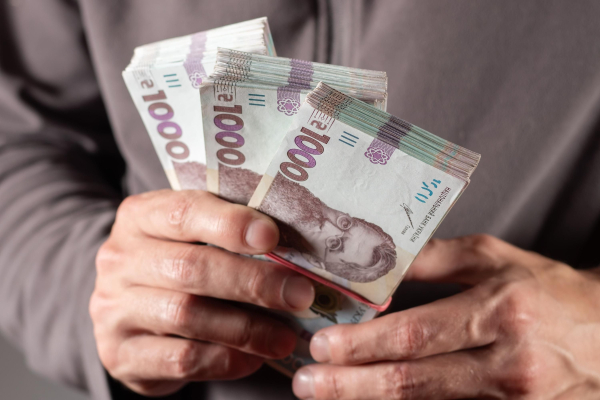
The tax authorities exposed 10 well-known tax evasion networks / Depositphotos
The tax service has identified 10 well-known retail chains that used so-called “business fragmentation” schemes. Thanks to this, they probably managed to evade taxes by 1 billion hryvnia.
How did the tax office expose the “business fragmentation” scheme?
These are retail chains that sell household appliances and electronics, clothing and footwear, and food products, the State Tax Service reports.
They recruited over 800 individual entrepreneurs into the scheme, into whom they “spliced” their large businesses. They worked on a simplified taxation system and could pay less taxes.
In practice, after one individual reaches the income threshold of the relevant EP payer group, another entrepreneur is introduced into the scheme. At the same time, the business continues to operate as a single network – with the same retail premises, staff, products and brand.
Materials on the identified facts were transferred to the Bureau of Economic Security of Ukraine, which is currently conducting pre-trial investigations.
How does the business fragmentation scheme work?
Business fragmentation schemes allow entrepreneurs not to show the entire turnover. Economist Oleg Getman and tax consultant Mykhailo Smokovich told this in comments to Channel 24 .
Large business fragmentation schemes are particularly common in retail and food service. They become noticeable when a supermarket or restaurant issues multiple payment receipts.

Oleg Getman
Economist, coordinator of expert groups of the Economic Expert Platform
All these splitting schemes in restaurant and retail chains are built on the fact that they are not just split into individual entrepreneurs, but also individual entrepreneurs do not issue the vast majority of fiscal checks. That is, they do not show their turnover and thanks to this they can continue to exist as individual entrepreneurs. If you force them to show all their turnover, then the splitting scheme becomes almost uninteresting. Because the limits will end in a month or a few weeks. Too many of them will have to be changed, so it will be more profitable to switch to a common system.
To combat the business fragmentation scheme, the Ukrainian tax service needs a reboot. To do this, they need to pass bill No. 9243, but its consideration is being postponed. Tax consultant Mykhailo Smokovich also believes that the tax service currently does not have enough resources to expose the schemes , so it should be given more opportunities.

Mykhailo Smokovich
Accountant, tax consultant
The tax office should detect such cases, but its tools are limited. If detected, it can interpret this as a fragmentation of the business and try to collect all these individual entrepreneurs together in the acts. And all the turnover that went through this store should be taxed not under the simplified system, as the company did, but under the general system. But here it is very difficult for the tax office to collect everything together, detect and hold the company itself accountable.
Courage is a sign of successful people who do not chase trends, but create them. With the Škoda Kodiaq you will experience it to the fullest! Thanks to its emotional design, the compact crossover stands out from the general stream of cars, and the comfortable interior and thoughtful features will make moving through the urban jungle a pleasant pastime, even on Monday or during rush hour.
What are the fines for tax evasion and how are businesses punished?
-
Intentional tax evasion in Ukraine entails large fines, restrictions on the right to hold office, and confiscation of property. So, if the underpayment is 85 thousand hryvnias or more, the fine can reach even 170 thousand hryvnias or more.
-
In total, the shadow economy in Ukraine causes budget losses of up to 1 trillion hryvnia, mostly due to salaries in envelopes, smuggling, and excise trade. Salaries in envelopes cause budget losses of 140-280 billion hryvnia, and “gray imports” and smuggling – 120-185 billion hryvnia.