
During the cold season, and especially during wartime, it’s wise to review the contents of your household medical kit, replenishing essential supplies, considering long-term health issues and potential power failures, avoiding stockpiling hazardous drugs, and acquiring the skill to properly use a dependable tourniquet beforehand.
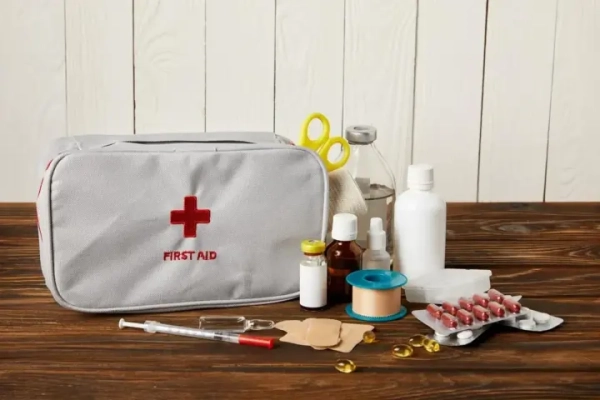
The Health Ministry (MOH) has given guidance to Ukrainians on how to assess their personal medical supply kit, bearing in mind that everyone now faces extended power cuts, and frigid temperatures encourage the spread of colds and various respiratory ailments, UNN reports.
Family physician Oleksandr Prokopchuk, consulted by the relevant ministry, stresses: a first aid kit’s worth lies not only in its existence but also in your understanding of its contents and their proper usage.
Why it’s vital to inspect your first aid kit promptly
Firstly, ongoing conditions tend to worsen in the wintertime, and both common colds and injuries (including domestic incidents) become more frequent. Secondly, during times of shelling and electrical outages, it may prove harder to promptly acquire required items or get assistance. Thirdly, medications tend to be depleted and expire rather swiftly.
Inspection: what to discard and what to acquire
1. Examine the expiry dates. It’s advisable to eliminate anything outdated, stored in questionable conditions (e.g., near a heater), unlabeled, or with compromised packaging.
2. Take stock of your provisions: bandages, sanitizing wipes, sticking plasters, antiseptic solutions, protective gloves. These items often run out quickly.
3. Arrange by distinct categories: “wounds,” “fever/pain,” “digestive issues,” “allergies,” “ongoing conditions,” and “tools.” When under pressure, sifting through a tangled collection of boxes will inconvenience everyone.
Essential first aid kit: a basic set addressing common scenarios
Following basic domestic first aid reasoning, typical necessities usually include:
- wound treatment items (antiseptic, sterile wipes/gauze pads, adhesive bandages in various sizes, bandage rolls, scissors);
- disposable hand protection;
- thermometer;
- fundamental fever reducer/pain reliever (paracetamol or ibuprofen, bearing in mind contraindications);
- products that you genuinely need for typical home-based issues (for instance, rehydration mixes are often helpful for cases of diarrhea/dehydration).
A general healthcare provider advises: avoid transforming your first aid box into a comprehensive pharmacy for every eventuality. Excessive amounts invariably hinder you from quickly locating what’s needed, and certain medications kept “in case” are subsequently utilized incorrectly.
Distinct section for relatives’ and chronic ailments
When a loved one needs to take medication on a regular basis, these items should be placed within the first aid stash, kept within their own specific packet/container and in adequate quantities. A practical rule: ensure you have enough for at least 2 weeks, optimally a month.
Consider incorporating:
- a compilation of diagnoses and medications (names, dosage levels, treatment schedule), and allergies;
- contacts for family/physician;
- If you have prescribed medications, ensure that you can refill your prescription ahead of time.
Wartime realities: the tourniquet and its common misuse
During conditions of martial law, it is recommended that you incorporate a high-quality tourniquet in the first aid kit for ceasing extreme hemorrhaging and practice its use ahead of time.
Critically: A laboratory version, employed to constrict an arm for blood collection, is not suitable for ceasing dangerous bleeding. It is not intended for such a load and does not supply reliable, controlled pressure.
What is best not to keep “just in case”?
A family’s first aid collection should omit drugs that necessitate prescriptions and ongoing oversight. It’s generally ill-advised to keep reserves of, and personally use:
- antibiotics;
- hormonal medicines;
- strong pain relief options (aside from paracetamol/ibuprofen).
These sorts of drugs have the potential to cause injury, mask symptoms, provoke adverse reactions, and waste vital time. Should the drug be necessary according to your ailment and prescribed by a physician, that changes matters: it aligns with the “chronic” sector and is stowed with a precise administration routine.
Proper medication storage
Store the first aid collection in a dry locale, situated as far as feasible from the kitchen, lavatory, and heat producing appliances.
Structure accessibility to ensure that grownups can swiftly obtain it, while preventing children from reaching it.
If electrical outages occur, it’s smart to retain a flashlight alongside the first aid package or a small head-mounted lamp contained inside.
Review drug instructions: some pills and solutions display temperature and light sensitivity.
We wish to remind you
The Ministry of Internal Affairs is strongly advising Ukrainians to assemble a 3 to 5-day stockpile of necessities owing to the energy crisis. As well, people are advised to primarily pack a suitcase of essentials. This ought to include documents, insulating attire, a first-aid package, heating provisions, personal hygiene products, and the needed volume of money.