
Main points
- A ferrite filter on cables protects against electromagnetic and radio frequency interference by passing the desired signal and absorbing noise.
- Manufacturers add ferrite filters to comply with electromagnetic compatibility standards, although their absence may be unnoticeable in a home environment.
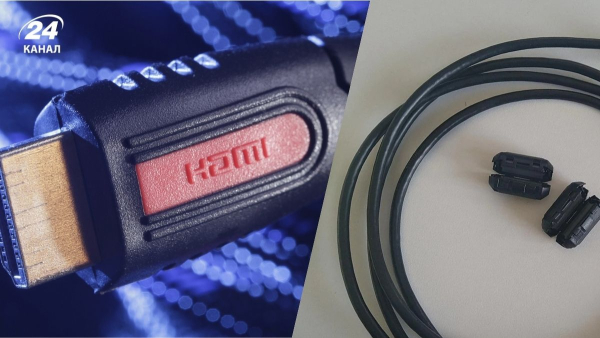
What is the role of a ferrite filter on a cable / Collage of Channel 24 / Photo Depositphotos
Almost everyone has seen a small cylindrical bulge at the end of an HDMI cable or power cord. Most users consider it part of the design or simply ignore it, but this element should play an important role in the stability of the electronics. Whether it really helps, we will tell you below.
This unusual cylinder is a ferrite filter and is designed to solve very real engineering problems related to digital signal transmission and electromagnetic compatibility of devices, Channel 24 reports.
How does this little cylinder work and is it really useful?
The frit core, “ferrite filter”, “bed” or “choke”, despite its simple appearance, has a far from simple composition: it is a ceramic material made of pressed oxides of iron, nickel and zinc, as Cadence notes.
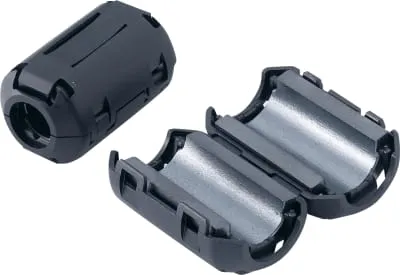
Ferrite filter looks simple but is a very useful tool / Photo MISUMI
Its main task is to protect against “noise”. One of the important problems of modern cables is electromagnetic (EMI) and radio frequency (RFI) interference. HDMI cables transmit data at ultra-high frequencies in the gigahertz range (TMDS technology).
The filter's job is to catch extraneous “noise” from home electronics, power lines, dimmers, or alarms. The filter also catches waves that can interfere with other equipment.
In practice, a ferrite filter works as a magnetic inductor that creates a barrier to high-frequency impedance. It acts selectively: it passes the desired video or audio signal almost unchanged, but absorbs unwanted interference energy (usually above 10 MHz) and dissipates it as a negligible amount of heat.
Do you need one today? In fact, in a typical apartment, the lack of a filter is unlikely to be noticeable. Modern high-quality cables already have reliable internal shielding, as experts say in a special thread on Reddit.
Why do manufacturers continue to add ferrite filters to wires?
The fact is that electronics manufacturers are required to adhere to strict electromagnetic compatibility standards (FCC, CE).
Ferrite cores are usually a cheap way to meet these requirements, but as we mentioned above, they don't really have much of an impact on consumer electronics in the home.
Not always, but very often, it is manufacturers of lower quality cables, especially those with poor shielding, that equip them with ferrite filters. Such cylinders can very often be seen on HDMI cables.
Also, such ferrite filters are still part of many power supplies because they produce much more electromagnetic interference than, say, USB devices.
In addition, the ferrite filter becomes critically important in certain conditions:
- In conference rooms with lots of equipment.
- Near power lines or powerful engines.
- When using many uninsulated wires at the same time.
In such “noisy” places, the filter prevents screen flickering, static crackling in the speakers, or sudden signal drops.
Additionally, ferrite cores work better on parallel power cables than on high-speed interfaces like USB 3.0 or DisplayPort, which have built-in protections.
Unlike the marketing myth of “gold connectors”, ferrite filters are a pragmatic engineering solution that actually works, although not always mandatory for home use.