
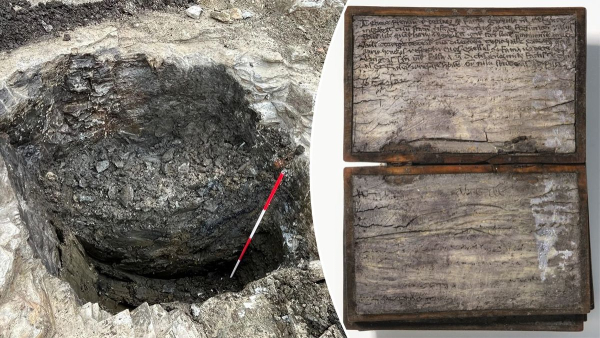
An 800-year-old wax notebook survived centuries in a medieval toilet / Collage of Channel 24/LWL/ S. Brentfuhrer
During archaeological work in the center of the German city of Paderborn, researchers have stumbled upon an object that had been buried for eight centuries. The find was preserved in conditions that would normally destroy any organic material.
How did he manage to survive?
At the site of the future construction of a new city administration, experts from the Regional Association of Westphalia-Lippe, known as LWL, discovered a rare medieval notebook that had spent almost 800 years in an ancient toilet. This small object dates back to the 13th and 14th centuries and consists of wood, wax and leather. It was found among household waste: fragments of ceramics, fragments of textiles, wickerwork, parts of wooden barrels and even a knife, writes ScienceAlert.
The extraordinary preservation of the object is explained by specific environmental conditions. The moist and oxygen-poor soil under the city streets slowed down the processes of decay of organic matter.
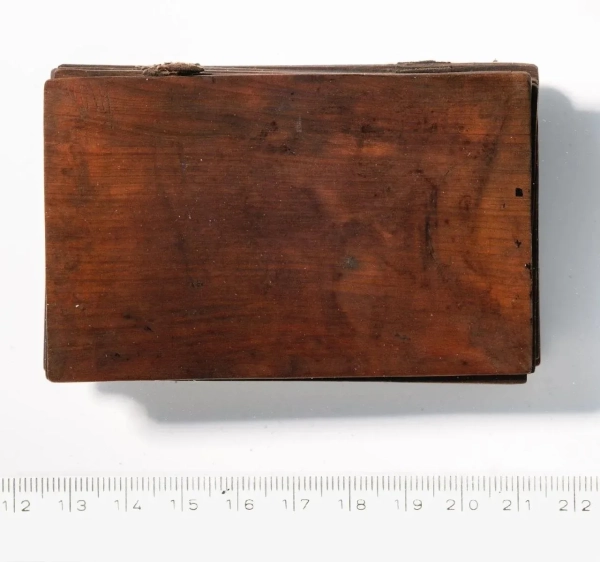
Wooden cover of a notebook without binding / Photo LWL/ S. Brentfuhrer

As the researchers note, similar finds have occurred in Lübeck and Lüneburg, but usually archaeologists only found individual fragments. In Paderborn, a complete and fully preserved specimen of this type was discovered for the first time in North Rhine-Westphalia.
It sounds strange, but for us archaeologists, latrines are almost always treasure troves,
– noted archaeologist Barbara Rüschoff-Parzinger, LWL cultural representative in Germany.
At first, the find resembled an ordinary wet lump of earth when it was taken to the restoration laboratory in Münster. Only after careful cleaning did the experts realize that they were holding a notebook with 10 pages. Eight of the pages are double-sided, and the two outermost ones are single-sided.
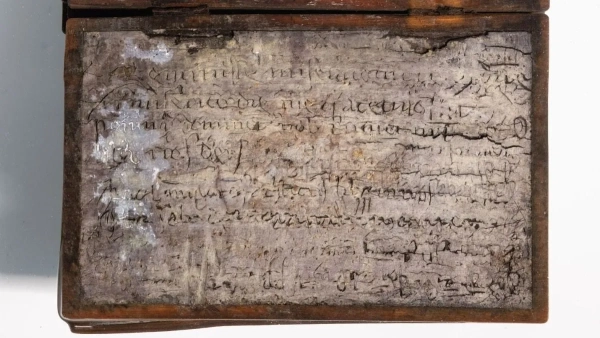
The notebook has wax pages on which the owner wrote with a sharpened stylus / Photo LWL/ S. Brentfuhrer
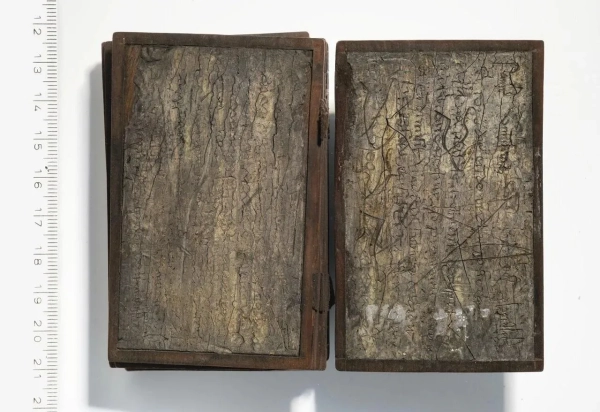
The notebook has wax pages on which the owner wrote with a sharpened stylus / Photo LWL/ S. Brentfuhrer
Because the pages were tightly pressed together under a large layer of earth, almost no dirt got inside, and the wood avoided deformation, which helped the wax survive.
I only had to clean the outside of the book, as the inside pages were pressed so tightly that there was no dirt on them. The wood also did not warp, so the wax remained intact, and the writing itself is easy to read,
– said restorer Susanne Bretzel from LWL.
The notebook measures approximately 10 by 7.5 centimeters and was kept in a leather case with a flap. The cover is embossed with a fleur-de-lis, a symbol associated with royalty and divine favor in the Middle Ages. This suggests that the book belonged to a wealthy person, probably a merchant.
Who wrote the book and what was its purpose? Initial speculation suggests that the author may have been a Paderborn merchant who recorded business transactions and his thoughts in the form of notes. Merchants were educated people: unlike the majority of the population, they could both read and write.”
– commented archaeologist Sveva Gai from LWL.
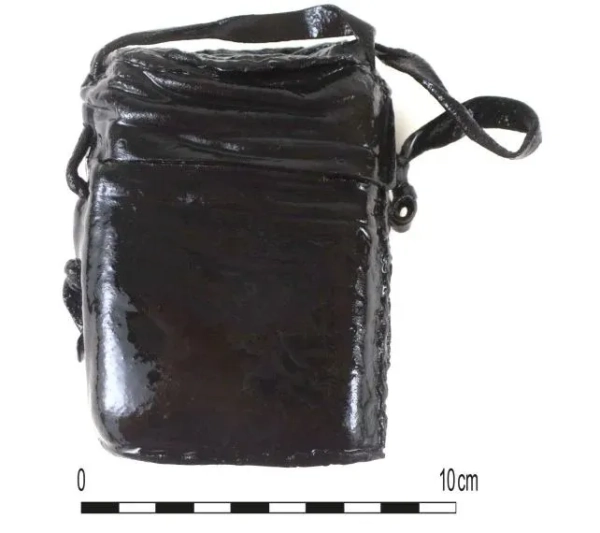
Leather bag in which the notebook was kept / Photo LWL/ S. Bretzel
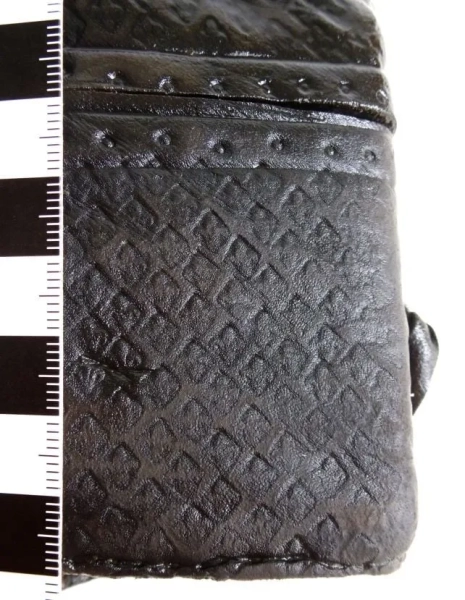
Embossed pattern on a leather bag / Photo LWL/ S. Bretzel
The text in the notebook is written in Latin in cursive, Live Science reports. Research suggests that the notes were made spontaneously and were of a practical nature: they could have been financial calculations or personal notes.
This type of notebook was used with a stylus (pen) made of metal, bone, or ivory. The sharp end was used to carve letters into the wax, and the flat end was used to erase old text.
Interestingly, traces of earlier notes were preserved under later layers of writing, as the owner did not always carefully erase what was written.
Individual words are recognizable, but transcription will take some time as some words may have been distorted by incorrect spelling,
– added Barbara Rüschoff-Parzinger.
The excavation site is located near the former Abdinghof Monastery, an area where the wealthiest townspeople once lived.
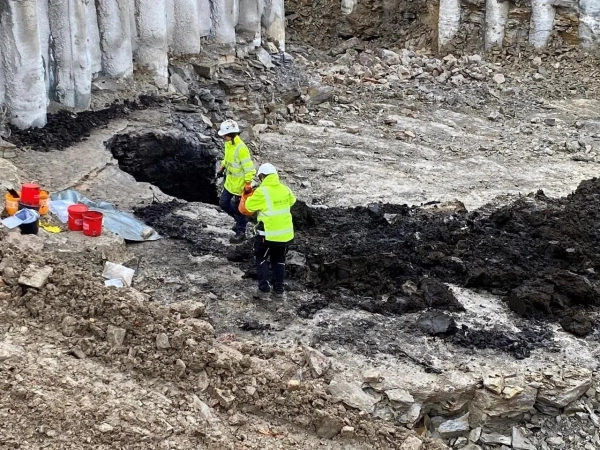
Excavation site / Photo LWL / Sveva Gai
Other finds in the dressing room, including fragments of expensive silk, confirmed the owner's high social status.
The remnants of silk fabric from the dressing room were partially torn into rectangular pieces, some of extremely fine weave and decorated. This may have been used as toilet paper after the once elegant fabric had to be thrown away,
– noted Suzanne Bretzel.
Scientists still don't know exactly how the notebook ended up on the bottom of the toilet. The most likely version is that the owner accidentally dropped it, Archaeology News noted. Now, experts are using modern imaging technologies and chemical analysis to study the composition of the wax, wood, and possible pigments.
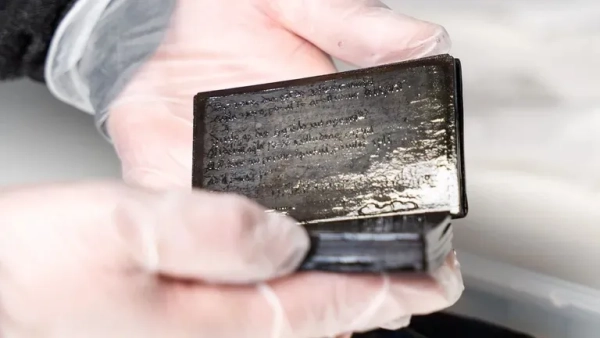
Restorer Susanne Bretzel holds a notebook / Photo LWL/E. Dowd
Scientists want to correlate the location of the toilet with a specific plot of land so that the inhabitants can be identified through archival research. Then, in the best-case scenario, it will be possible to link the wax tablet to a specific person's name.
The process of complete restoration and research can take up to one year. Once all the work is completed, the unique artifact, along with the case, is planned to be presented in the exhibition of the LWL Museum in Paderborn.