
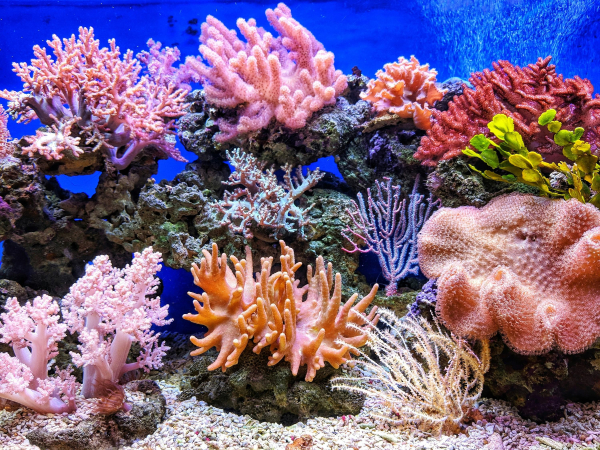
The world's coral reefs are under threat due to a possible super El Niño / Unsplash / qui nguyen
Climatologists and marine biologists are watching with alarm as El Niño develops, which could bring record-breaking ocean warming, a critical blow to coral reefs weakened by previous waves of bleaching.
Experts are increasingly confident that the El Niño climate phenomenon will return this year. Some researchers suggest that it could be especially strong, which means new extreme ocean temperatures, droughts, heavy rains and massive stress on marine ecosystems. Phys writes.
Why is the new El Niño scaring scientists?
Of greatest concern is the state of coral reefs , which have experienced a series of massive bleaching episodes in recent years. Scientists warn that a new wave of warming could prove devastating for many of the world's reef systems.
Coral researcher Clint Oakley of Victoria University of Wellington said the prospect of a strong El Niño makes him “fearful but not surprised.” “Every global coral bleaching event has occurred during El Niño years,” he said.

How do corals lose color and die?
Corals survive through a symbiotic relationship with microscopic algae that live within their tissues. It is these algae that provide the corals with nutrients through photosynthesis and give them their characteristic bright colors .
When water temperatures rise too high, this balance is disrupted . Algae leave the corals or are pushed out by them, after which the reefs turn white and gradually begin to starve.
If the water cools quickly enough, corals can survive and gradually recover. But prolonged overheating often becomes fatal .
Researcher Jen Matthews from the University of Technology Sydney explained that corals can die from exhaustion. “If the water takes too long to cool down, or the heat is too intense, the corals actually start to starve and die,” she said.
Mass bleaching has become the new norm
Local and short-term bleaching is a natural process for coral reefs. The problem is that global warming has made such events more frequent.
According to Clint Oakley, corals simply don't have time to recover between waves of heat stress.
“If corals bleach again before they have recovered and produced a new generation, this is already a downward trend,” the scientist explained.
The last global episode of mass bleaching was officially recorded in 2024. Since then, the situation has only worsened. In the Caribbean, some coral species have already been called “functionally extinct.” Meanwhile, the Great Barrier Reef in Australia lost between 15% and 40% of its coral cover in different areas between 2024 and 2025.
Scientists emphasize that the problem lies not only in El Niño itself, but also in the general increase in ocean temperatures due to climate change.
“The average sea temperature in recent years is already equal to the peak of the global bleaching in 1998,” said Clint Oakley. In other words, even without an extreme El Niño, the ocean is currently in a dangerous state for corals. Further warming can only accelerate the degradation of reefs.
Scientists are trying to “buy time”
Researchers around the world are working on ways to save corals. Experimental solutions include special nutrient gels, shading reefs from the sun, and even genetic technologies to create more resilient species.
According to France24 , most scientists admit that these methods are not able to completely solve the problem. “There are many important and innovative protection strategies, but they all just buy us time,” said Jen Matthews.
She warned that without real reductions in greenhouse gas emissions, coral reefs could disappear as humanity knows them today.
Coral reefs are critical ecosystems for marine life. They serve as nurseries for fish, support biodiversity, and protect coastlines from storm surges and erosion. Researchers estimate that the world has already lost up to 50% of its coral in recent decades.
Kimberley Reid, a scientist at the University of Melbourne, said the strength and duration of El Niño remained uncertain, but she stressed that even without the climate phenomenon, the outlook for coral reefs looked bleak.