
Main points
- Ukraine plans to introduce food banking, forcing supermarkets to donate products with almost expired expiration dates to charitable organizations.
- The new rules could include tax breaks for supermarkets that donate food to charity and fines for those who continue to dispose of suitable food.
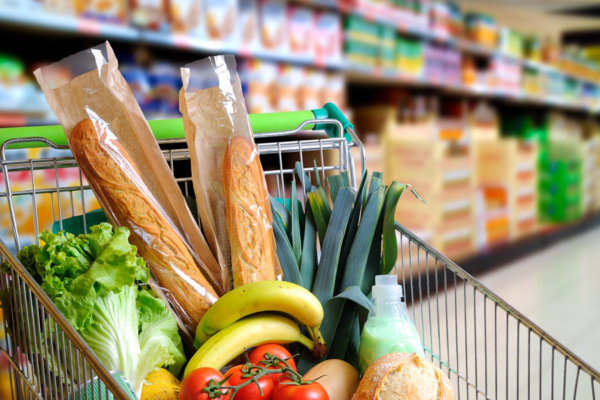
Ukraine is preparing new rules for supermarkets / Shutterstock
In Ukraine, as part of adaptation to EU standards, a food banking system may be introduced. This is a mechanism under which supermarkets will be obliged to donate products with an almost expired shelf life to charitable organizations, rather than throwing them away.
What is food banking and how does it work?
A similar system is already operating in France, the Czech Republic and a number of other EU countries, writes “RBK-Ukraine”.
The initiative aims to reduce food waste. Instead of throwing away expired food, stores should donate it to charities called “food banks.”
These products will then be distributed to people in need. Lawyer Dina Dryzhakova explains that this will be a serious change for the Ukrainian market.


Dina Dryzhakova
Head of the law firm “Prima Leader Group”
The initiative is progressive and inevitable within the framework of EU integration, but it will not be easy for retail chains.
There will be both benefits and penalties for businesses
The new rules could provide both financial incentives and penalties for stores. If a supermarket donates products to charity:
- he can receive tax benefits;
- transactions may be exempt from VAT;
- may waive the income tax on such a transfer.
Previously, the free transfer of goods was legally considered a “sale for zero hryvnias” and could be subject to additional taxation,
– explains Dryzhakova.
At the same time, stores that dispose of suitable food instead of handing it out to people risk receiving administrative fines. Such a penalty is already in force in France.
What products can be donated to food banks?
The legislation plans to clearly distinguish two types of labeling:
Can be transferred: products with a “Best Before” date (goods that may lose their ideal taste or texture but are still safe to consume)
It is forbidden to transfer: products marked “Use by” (after this date the product is considered potentially dangerous and must be disposed of).
Why might supermarkets be against it and what are the risks?
Despite the tax benefits, for retail chains this will mean additional costs and changes to internal processes. Among the main challenges:
- Separate storage areas for products for distribution – so that they do not mix with regular scraps;
- Automated accounting – the IT system should signal, for example, 48 hours before the expiration date, that the goods should be moved to the food bank area;
- Additional personnel costs – sorting, packaging, and document processing will take up working time.
Separately, we will have to wait for changes to the Tax Code and develop new forms of internal documentation so that the tax authorities do not treat charitable transfers as hidden sales.
– says the lawyer.
Experts warn that Ukrainian buyers may have mixed feelings about the delivery of products “on the verge of overdue.”
Damaged packaging or rotten vegetables under the guise of charity are a direct path to scandal in the media and social networks,
– added Dryzhakova.
That is why supermarkets will have to carefully monitor the quality of goods that are transferred to food banks.
What should stores do now?
According to lawyer Dryzhakova, store owners should now:
- Analyze the remaining goods.
- Find reliable charitable foundations for potential partnerships.
- Prepare the legal department for new accounting and write-off rules.
What does this mean?
For Ukraine, this could be:
- another step towards EU standards;
- a way to reduce food waste;
- a new social assistance mechanism;
- a serious change for retail.
At the same time, businesses will have to adapt internal processes and invest in a new accounting and logistics system.
What is the forecast? Most likely, tax incentives will be introduced first, followed by mandatory transfer rules. After that, fines for disposing of usable food may appear.
Note! Food banking can radically change the approach of Ukrainian supermarkets to products with an expired shelf life. For buyers, it is a chance to reduce food waste and support those in need, and for businesses – new rules of the game, additional costs and the risk of fines.
How does such a scheme work in Poland?
For several years, Poland has been actively developing a food banking system – a mechanism by which supermarkets and manufacturers donate products with a short shelf life to charitable organizations instead of recycling, writes Banki Zywnosci.
Today, there are 31 food banks operating across the country. This system provides assistance to about 1.5 million people who cannot provide themselves with food. These include:
- low-income families;
- pensioners;
- single mothers;
- people in crisis situations;
- homeless;
- persons with disabilities.
In the Polish model, supermarkets donate non-commercial products – those that can no longer be sold but remain safe.
These may be products with damaged packaging, short shelf life or less than ideal appearance. After collection, they are delivered to food bank warehouses, where the products are inspected, sorted and stored in proper conditions.
Food banks do not distribute food directly to people. They work through partner organizations – charitable foundations, soup kitchens, social centers, religious organizations and other aid structures. It is these organizations that form food kits or prepare hot meals and deliver them to people in specific regions who need support.
How does food banking work in the Czech Republic?
In the Czech Republic, the food banking system has long since moved from an experimental stage to a full-fledged state aid model. This was stated by Aleš Slaviček, head of the Czech Federation of Food Banks, during a roundtable on food banking, UNIAN reports.
The system has been operating at the legislative level since 2018 and obliges retail chains to donate suitable products to charity instead of recycling. Currently, the Czech food banking organization is considered one of the most developed in Central Europe.

Ales Slavicek
President of the Czech Federation of Food Banks
We have 15 regional banks, one large central hub, and 1,150 NGOs working with us. There are 11 million people living in the Czech Republic – 10% of them are on the verge of poverty, according to the authorities. NGOs say that all 20% – which is 2 million.
Last year alone, the Czech food bank network supported over 400,000 people. The majority of recipients were single mothers and the elderly (62%). The system also saved and distributed about 17,400 tons of food.
Funding is partly provided by the state: about 5 million euros of state support has been transformed into over 31 million euros in aid in the form of donated products.