
Main points
- The study shows that nearly 80% of the world's rivers are losing dissolved oxygen due to climate change and human activities.
- Low oxygen levels could cause environmental crises, including reduced biodiversity and degraded water quality, if carbon dioxide emissions are not reduced.
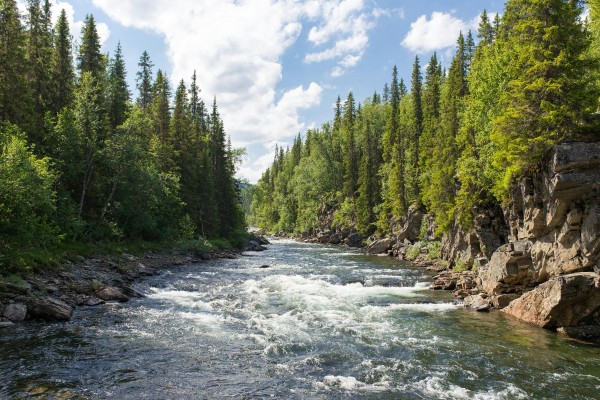
80% of Earth's rivers are losing oxygen – scientists warn of a dangerous turning point / Unsplash / Jon Flobrant
Scientists have recorded a massive drop in oxygen levels in rivers across the planet. The process has been going on for decades and is already starting to change aquatic ecosystems in different parts of the world.
An international team of researchers led by ecologist Qi Guan of the Chinese Academy of Sciences has concluded that nearly 80% of the world's rivers are gradually losing dissolved oxygen, a critical element for the life of aquatic organisms, Science Alert reports.
Why have rivers all over the Earth started losing oxygen?
Scientists analyzed 3.4 million satellite images , as well as climate data for the period from 1985 to 2023. In total, the team studied more than 16,000 rivers in different regions of the world.
On average, dissolved oxygen levels in river water have been declining by 0.045 milligrams per liter every decade. At first glance, this may seem like a small number, but for aquatic ecosystems, even small changes can have serious consequences.

Why is oxygen in water so important?
This is not about the oxygen that is part of the water molecule, but about dissolved oxygen – it is what fish, algae, bacteria, plankton, and other organisms use to “breathe.”
As scientists explain, the bonds that hold oxygen in water are quite weak. Even a slight increase in temperature can push oxygen out of rivers and into the air.
Warmer water physically holds less oxygen . That's why global warming has become a major factor in the degradation of river ecosystems. The authors estimate that about 63% of the global decline in oxygen levels in rivers is directly related to climate change.
One of the main findings of the study was that oxygen is disappearing most rapidly not in cold regions, as previously thought, but in tropical rivers. The results of the study were published in the journal Science Advances .
The Ganges River in India and the Amazon in South America are particularly vulnerable. The Ganges is losing oxygen at a rate 20 times faster than the global average. Scientists had previously expected the greatest deoxygenation to occur at high latitudes, as the Arctic and northern regions warm faster than other parts of the planet.
However, tropical rivers were more vulnerable because their water initially contained less dissolved oxygen due to higher temperatures. This means they are more likely to reach a state of hypoxia – a critical oxygen deficiency where most living organisms cannot survive.
How do people make things worse?
Climate change is only part of the problem. Researchers say human activities are changing the composition of river water and increasing oxygen loss.
Among the main factors:
- banking;
- lowering of the water level;
- heat and heat waves;
- ingress of salts, organic substances and fertilizers into the water;
- reduction in river flow.
When water moves more slowly, it receives less oxygen from the atmosphere. For example, in fast-moving streams or rapids, water naturally becomes saturated with air. In contrast, stagnant and overheated bodies of water quickly lose their ability to support life.
Why is even a small drop in oxygen dangerous?
Scientists warn that a drop in dissolved oxygen levels of just 0.1 milligrams per liter – about the amount rivers have lost on average over the past 40 years – can already change the balance of ecosystems.
Due to the lack of oxygen, a mass death of fish and other organisms begins. After that, bacteria that decompose dead organic matter use up the remaining oxygen even faster, creating so-called “dead zones”.
Such areas could become more common around the world. “Deoxygenation is a very slow process. But if it continues for a long time, the negative impact will destroy river ecosystems,” Qi Guan explained to the Associated Press.
He said low oxygen levels could cause “a series of ecological crises,” including a decline in biodiversity and deteriorating water quality.
What will happen next?
The authors of the study predict that by the end of the 21st century , rivers in most regions of South America, India, the Arctic, and the eastern United States could lose another approximately 10% of dissolved oxygen if carbon dioxide emissions continue to increase.
Even an additional 4-5% drop could significantly increase the risk of environmental disasters in river systems. The researchers emphasize that without reducing greenhouse gas emissions and more effective water management, the situation will only worsen.