
Main points
- Digging up trees in the forest without special permission is prohibited, as this is considered unauthorized use of forest resources according to the Forest Code of Ukraine.
- Illegal tree felling is punishable by fines, and in the event of significant damage, may result in criminal liability.
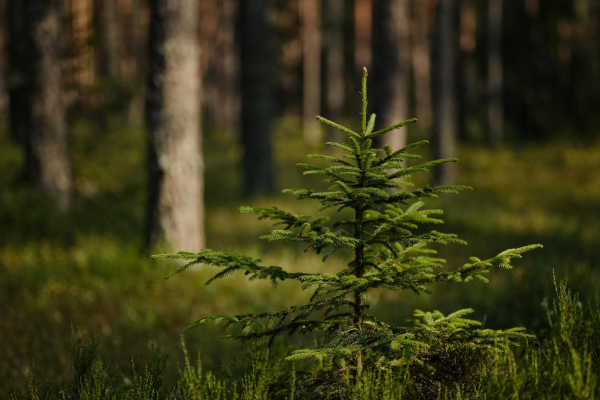
Is it possible to dig up a tree in the forest and bring it home / Pexels
Many Ukrainians believe that if a small pine, fir, or oak tree grows in the forest, they can simply dig up the sapling and transplant it into their home. However, in reality, this cannot be done without permission.
Why can't you just dig up the tree?
Forests in Ukraine are the object of state, municipal or private ownership, and the use of forest resources is regulated by the Forest Code of Ukraine.
According to Article 69 of the Forest Code, special use of forest resources is possible only on the basis of a special permit. That is, you can dig up a tree in the forest only if you have special documents:
- forest ticket;
- or logging ticket.
The thing is that any tree, even a small self-seeder or sapling, is not “nobody's.” It is part of the forest resources. Simply coming to the forest with a shovel and taking a tree for a summer cottage or yard is legally considered unauthorized use of forest resources.

Note! Article 66 of the Forest Code allows Ukrainians to freely visit forests and collect berries, mushrooms, nuts, and herbs for their own use free of charge, notes the Forest Agency of Ukraine. However, trees are not included in this list.
When is it still possible to dig up a tree?
There is still a legal option to dig up a sapling in the forest for a summer residence or a personal plot. To do this, you need to obtain permission from either the forest owner or its permanent user.
This could be:
- state enterprise “Forests of Ukraine” or a local forestry enterprise;
- utility company;
- private forest owner.
In practice, there are several ways to legally obtain a tree. For example, you can buy a sapling from a forestry or nursery. After all, forestry companies sometimes sell ornamental and forest saplings officially.
You can also get permission to transplant or dig. Sometimes this is possible during sanitation work or clearing of areas.
What is the responsibility for digging up a tree?
If a tree is damaged or dug up illegally, you can be punished. The legislation provides for administrative and even criminal liability.
According to Article 65 of the Code of Ukraine on Administrative Offenses, illegal logging, damage and destruction of forest crops entails fines:
- for citizens – from 510 to 1020 hryvnias;
- for officials – from 2,550 to 5,100 hryvnias.
They may also calculate separate compensation for damage at different rates depending on the species, age, and diameter of the tree.
If the damage is significant or caused in protected areas, or a significant number of trees are involved, liability will not be limited to a fine. In such situations, Article 246 of the Criminal Code of Ukraine may apply.
According to the provisions of this article, illegal felling or other damage to trees that caused significant damage is punishable by a fine of 17,000 to 25,500 hryvnias , arrest, restriction, or imprisonment, depending on the circumstances of the case and the amount of damage caused.
When to transplant a tree?
If you managed to obtain a tree from the forest legally, it is important to choose the right time to transplant it. It is best to choose a period when the plant is dormant and does not spend a lot of resources on growth.
Traditionally, the most favorable seasons are considered to be early spring and autumn:
-
Experts recommend transplanting in the spring before the sap starts to flow – usually from March to mid-April, depending on the region and weather conditions. At this time, the soil has already thawed, but the buds have not yet bloomed, so the tree adapts more easily to the new location.
-
In the fall, it is recommended to choose October or November for transplanting, when the tree has already entered the dormant phase, but the ground has not yet frozen. This way, the root system will have time to partially take root before the onset of cold weather.
However, it is undesirable to transplant trees in the summer. During the heat and active growth period, the plant experiences significant stress due to the loss of part of the roots and lack of moisture. This is especially bad for coniferous trees, which are sensitive to the drying out of the root system.
Important! Associate Professor of the Department of Biology, Ecology and Agrotechnology of Bohdan Khmelnytskyi Cherkasy National University Viktoria Osypenko, in a comment to Suspilny, advised to definitely take into account the root system of the tree when transplanting. For example, a Christmas tree has branched roots, so it is not recommended to plant it near the house so as not to damage the foundation and communications.
What other trees can damage a house?
Some ornamental plants can also cause problems for the house. For example, wisteria is known for its rapid growth and powerful woody shoots, which over time thicken and begin to put pressure on structures. Because of this, the plant can damage walls, gutters and even the roof.
Ivy can be no less problematic. Its strong root system penetrates into small cracks and crevices, gradually widening them and weakening the surface of the walls. In addition, the growth of shoots sometimes affects the condition of the roof.
Jasmine also needs to be controlled. If not pruned in time, it can clog drainpipes, gutters, vents, and units. As a result, air circulation deteriorates, moisture accumulates, creating favorable conditions for mold and water to enter the house.