
Main points
- State Duma deputy Renat Suleimanov stated the need to end the war, citing the critical state of the Russian economy.
- He noted that large military spending is fueling inflation and forcing cuts in social and investment budgets.
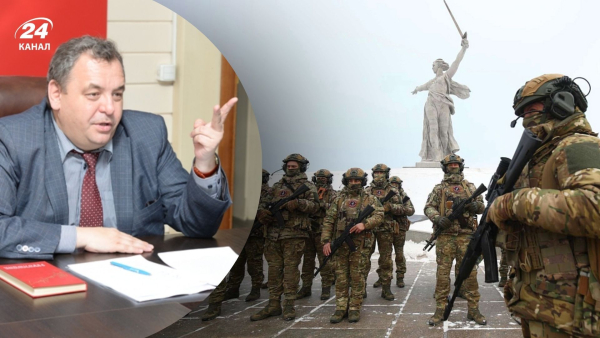
State Duma deputies spoke about the need to end the war / Collage of Channel 24
The economy of the aggressor country is currently in a critical state and may not be able to withstand the continuation of the war against Ukraine. Thus, Russian deputies have spoken about the need to complete the so-called “SVO”.
This was stated in an interview by State Duma deputy from the Communist Party of the Russian Federation Renat Suleimanov, answering a question about how the possible termination of peace talks will affect the country's budget. His words are reported by the Agency.
What do they say in Russia about the economic inability to wage war?
The deputy noted that large defense expenditures ensure jobs in the relevant industry and salary stability, but at the same time accelerate inflation and force cuts in other budget items – social and investment.
“Officially, 40% of the federal budget is defense and security. What kind of development, investments, and capital expenditures can we talk about? Neither tanks nor shells have consumer value: the economy produces them, but the population cannot use them,” Suleymanov emphasized.

Journalists note that the deputy's rhetoric has changed. Previously, he demanded tough conditions for Ukraine, up to and including surrender, and in 2022 he supported mobilization as a necessary step to achieve the goals of the war.
Currently, Suleimanov is in favor of ending the conflict as soon as possible, calling it protracted and comparing it to the period of World War II, expressing hope for a “victorious finale.”
The special operation has been going on longer than the Great Patriotic War. God willing, it will end in victory, not an intermediate result,
– said the deputy.
It is also possible that the Russian rhetoric is gradually changing due to Ukraine's “long-range” sanctions. In particular, on the night and morning of May 19, Russia announced the repelling of a massive attack by more than 300 Ukrainian drones, which were allegedly directed at several regions, including the Moscow region. The General Staff of the Armed Forces of Ukraine, for its part, confirmed the strike on the oil refinery in the Nizhny Novgorod region and the Yaroslavl-3 oil refinery.
Criticism of Internet restrictions is also growing in Russia, both from opposition forces and some United Russia deputies. Russian media also link this to the approaching parliamentary elections, against the backdrop of which changes in public sentiment are observed: sociological data record a decline in Putin's support, and the administration acknowledges the population's fatigue with the policy of bans and restrictions.
For his part, the head of the presidential department for public projects, Serhiy Novikov, said that “society is tired of prohibitive rhetoric.”
How do analysts assess the economic and political problems of the aggressor country?
Russian dictator Vladimir Putin has repeatedly claimed that Russia's unemployment rate, at around 2.2%, is one of the lowest in the world, but this suggests that the labor market's growth potential is almost exhausted.
Bloomberg Economics experts believe that an acute labor shortage could hamper Russia's economic development for a long time. The reasons are an aging population and the war against Ukraine.
Political scientist Oleksandr Morozov notes that the authorities are trying to react through media images such as show-off meetings, but this does not have a significant effect, and data on ratings may even be hidden.
In addition, the head of Estonian intelligence, Kaupo Rozin, stated that Putin has limited room for maneuver due to the lack of significant successes on the front and the depletion of resources under sanctions pressure.