
Main points
- Apple provides strong data protection through end-to-end encryption, including backups and biometric data stored in the Secure Enclave.
- Solutions like App Tracking Transparency and Lockdown Mode significantly limit the possibilities of ad tracking and spying attacks, setting high privacy standards for the industry.
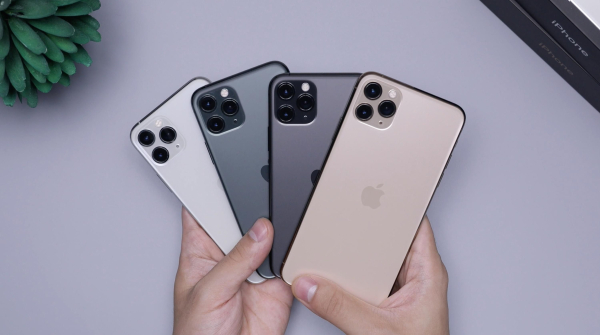
Apple has made a bet on privacy – here are 5 features that set the iPhone apart from its competitors / Unsplash / Daniel Romero
Privacy has long been a core value for Apple devices. The company has spent years creating tools that not only protect users' data but also force competitors to rethink their own security approaches.
Apple has positioned privacy as one of the core values of its ecosystem for many years. These are not just marketing statements, but real technological solutions that include encryption, location data protection, blocking ad tracking, private processing of artificial intelligence and special modes of protection against cyberattacks. This is reported by BGR .
What Apple decisions made privacy an industry standard?
Full encryption that even covers backups. One of Apple's strongest points remains end-to-end encryption.
When a user sets a passcode on their iPhone, the device automatically activates hardware-based data protection. Face ID and Touch ID biometric data is stored in an isolated Secure Enclave environment inside Apple’s proprietary processors.
This approach works across the company's entire ecosystem – from the iPad and MacBook to the Apple Watch and the Vision Pro headset with its Optic ID system.

Apple has paid special attention to cloud security through the Advanced Data Protection feature. It allows you to additionally encrypt iPhone backups, photos, notes, and other data in iCloud so that even Apple itself cannot access them.
Such a strict level of protection has become a subject of controversy with regulators. Due to pressure from British authorities, the company was forced to disable this feature for users in the United Kingdom.
In comparison, Android backups in the Google One cloud service do not have similar full end-to-end encryption for all data types.
How does Apple limit location data collection?
Geolocation has long been one of the most valuable categories of data for the advertising market. Apple began systematically reducing access to precise coordinates back in iOS 14, when it allowed users to share only their approximate location with apps instead of their exact location.
At the same time, camera and microphone usage indicators appeared in the system, notifying users about programs' access to these components.
In iOS 26.3, the company expanded on this approach by introducing the Limit Precise Location feature. It allows you to limit the accuracy of location data transmitted to cellular networks. For now, the feature only works on devices with Apple's C1 and C1X modems.
Equally important is the work of the Locator network. Apple protects information about the location of devices, people, and AirTag accessories with end-to-end encryption, preventing unauthorized parties from obtaining this data.
Fighting advertising tracking
In 2020, Apple introduced one of its most high-profile privacy features, App Tracking Transparency. Since then, any app on an iPhone or iPad has been required to obtain the user's direct permission before tracking their activity across different services.
The decision was a major blow to the advertising business of companies like Meta. Analysts estimate that the innovation cost Facebook about $10 billion in lost revenue in 2022 alone.
In parallel, Apple introduced App Privacy Labels – special “labels” that show in the App Store what data an application collects before it is installed.
Google later added a similar Data Safety section to the Play Store, but there is still no complete analogue of ATT on Android.
Safari and iCloud also work to protect the user
The Safari browser uses Intelligent Tracking Prevention technology to block cross-site tracking.
Additionally, Apple offered Mail Privacy Protection, the Hide My Email service, and iCloud Private Relay, which hide the user's real email address and IP address.
Private Cloud Compute as an Alternative to Conventional Cloud AI. When Apple introduced Apple Intelligence at WWDC 2024, the company placed a special emphasis on privacy.
To process complex AI queries, the Private Cloud Compute system was created – a special infrastructure that allows computing in the cloud without storing or transferring personal data.
Unlike many competing AI services, where user queries can be used to train models, Apple claims complete data isolation.
Although Apple is still lagging behind its competitors in developing generative artificial intelligence, this approach could become its key advantage in the future.
According to insiders, an updated Siri based on an adapted version of Gemini may be presented as early as WWDC 2026, but will work within Apple's proprietary architecture.
Lockdown Mode – maximum level of protection
Last but not least, the feature is Lockdown Mode. This mode appeared in 2022 in iOS 16, iPadOS 16, and macOS Ventura as a tool for people who may be targets of sophisticated spy attacks – journalists, politicians, activists, or public figures.
As Lifehacker writes, enabling Lockdown Mode significantly limits some of the device's functions, but in return makes it much more difficult for spyware to penetrate.
This tool is considered by many experts to be the most powerful software protection that Apple offers to ordinary users.
The combination of these solutions has made Apple not just a gadget manufacturer, but a company that actually shapes new standards of digital privacy for the entire technology industry.