
Main points
- The war in the Middle East has led to a fertilizer shortage in Africa, threatening harvests.
- Fertilizer prices have increased by more than 90%, and farmers in Africa are reducing their planting areas due to lack of resources.
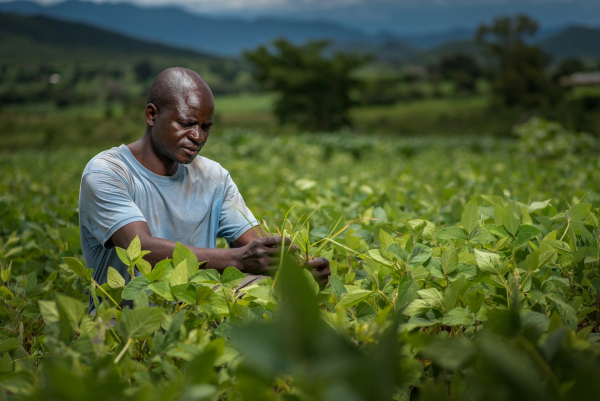
African farmers in distress / Photo Unsplash
The war in the Middle East and supply problems through the Strait of Hormuz have already hit Africa's agricultural sector. In many countries, farmers are abandoning fertilizers due to soaring prices and product shortages.
African farmers face fertilizer shortages
African countries are increasingly feeling the effects of disruptions in the global fertilizer and fuel markets, Bloomberg reports. The situation is particularly difficult in Malawi, where the majority of the population depends on small-scale farming, and farmers are already preparing for a problematic sowing campaign.
The crisis was triggered by supply disruptions through the Strait of Hormuz, a key route for fertilizer exports from the Persian Gulf, which has sent global prices for urea, one of the most widely used nitrogen fertilizers, soaring by more than 90%.
In Malawi, about 60% of imported nitrogen fertilizers come from the Gulf countries. Farmers and agricultural organizations fear that due to the shortage, large batches of products will primarily be received by richer countries, while poor countries will be left without the necessary resources.
Problems are already being felt in other countries in the region. In Nigeria and Lesotho, farmers are reducing the area they plant or completely abandoning the use of fertilizers. In Senegal, farmers are forced to buy cheaper and lower-quality products due to a shortage of quality products.
Experts warn of risk of food crisis
According to the Food and Agriculture Organization of the United Nations, a sharp increase in fertilizer prices could significantly reduce yields in sub-Saharan Africa. Farmers there already use minimal amounts of agrochemicals, and a new price increase could worsen the situation.
South Africa is already forecasting its lowest wheat harvest in 12 years. Meanwhile, in Malawi, which has suffered from droughts, floods and cyclones in recent years, there are fears of mass famine. According to international estimates, more than 22% of the country's population is already facing acute food shortages.
The situation is also complicated by a fuel crisis. In Malawi, diesel and gasoline prices exceed $3.50 per liter, and long lines form at gas stations. The country's government is already selling gold reserves to buy fuel and has appealed to the World Bank for emergency assistance.
Experts warn that even if the situation in the Middle East stabilizes, the restoration of fertilizer supplies will take a long time due to logistical overload and export restrictions by individual countries.
The war in the Middle East is driving up global food prices: what has become the most expensive?
Among other things, world food prices continued to rise in April due to higher prices for oil, grains, and meat.
-
Global food prices rose 1.6% in April due to higher prices for oil, grains, and meat caused by the war around Iran.
-
The vegetable oil index rose 5.9%, and meat prices reached record levels, with the additional impact of rising demand for biofuels.
The grain price index rose 0.8% in April. Market concerns have increased about a possible reduction in wheat plantings in 2026. Some farmers are considering switching to crops that require less fertilizer, as their cost has increased significantly.