
Main points
- Ghana plans to acquire a 38% stake in the Deepwater Tano Cape Three Points oil block from Russian company Lukoil.
- Ghana has already ordered an asset valuation and notified Lukoil of its intentions, exercising its preemptive right to buy out the sanctioned stake.
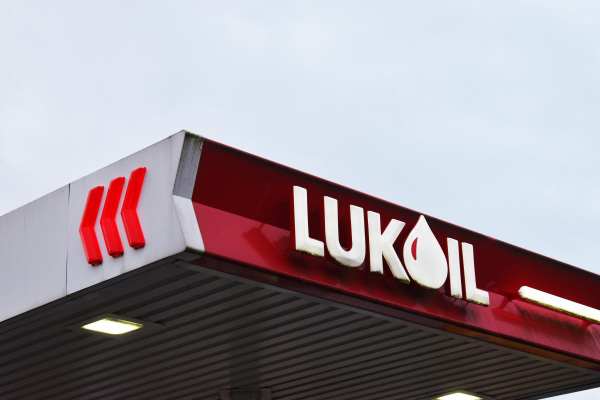
Ghana wants to take a stake in Russia's Lukoil / Shutterstock
Ghana is considering acquiring Russian oil company Lukoil's 38% stake in the Deepwater Tano Cape Three Points offshore block. The aim is to strengthen the state's control over future oil production and redistribute influence in the project.
What is known about Ghana's plans to take over Lukoil's stake?
According to sources, the West African country may use its preemptive right to buy out the stake, which is currently tied to sanctions restrictions, Bloomberg writes.
This is a block of shares that has come under pressure from international sanctions and a change in ownership structure following agreements with investors. In particular, Ghana has already:
- considers exercising the preemptive right to purchase a share;
- ordered an asset valuation;
- informed Lukoil of its intentions.
In parallel, private equity firm Carlyle Group had previously agreed to acquire a significant portion of the Russian company's international portfolio, potentially including the Ghanaian block. This was one of the factors that strengthened Ghana's position.

The situation is complicated by the fact that European sanctions against the Russian company have increased uncertainty about the Pecan field project , which has not yet been fully developed. Norway's Aker Energy previously withdrew from it due to risks and restrictions.
What does this mean?
In fact, it is about reformatting control over a strategic oil project, where:
- Sanctions limit the participation of Russian companies;
- States are trying to regain control of resources;
- International investors are reviewing risks.
Note: The story of the Ghanaian oil block demonstrates how sanctions are gradually changing the global energy market. Russian companies are losing control of assets, and member states are increasingly actively reclaiming strategic resources.
What other countries want to take away Lukoil shares?
Bulgaria and Romania are considering nationalizing Lukoil assets in response to sanctions against Russian oil companies. Maksym Gardus, a communications specialist at the Razom We Stand NGO, told Channel 24. He explained the consequences this would have for Russia.
Gardus noted that Bulgaria and Romania have huge Russian oil companies. And Moldova has a network of gas stations and a refueling terminal at Chisinau airport. Each of these countries is taking different measures to protect itself from US sanctions against Russian oil companies.
For example, in Romania, according to him, everyone was given powers quite smoothly, although there were protests from the pro-Russian opposition, but in this country it is not so strong.
In Bulgaria, it almost turned into a crisis because the parliament was split in half. There were arguments between the president and the prime minister, and yet they passed a law, and the rather large Lukoil plant will be nationalized and then put up for privatization,
– he said.
At the same time, Moldova has requested emergency assistance from Romania, which has oil reserves and is a producer of its own. Bucharest has a field and a fairly old oil and gas sector.
How is the US pressuring Russia over the sale of Lukoil assets?
The Office of Foreign Assets Control of the US Treasury Department has repeatedly extended the deadline for concluding deals, as Reuters reports.
Representatives from the U.S., Russian and Ukrainian governments have failed to make a breakthrough in recent weeks in talks on a peace deal. The discussions also included U.S. sanctions on Russia's largest oil producer, state-owned Rosneft, and its second-largest producer, Lukoil, according to three sources.
The Treasury Department's Office of Foreign Assets Control has already extended the deadline for potential buyers three times to negotiate with Lukoil for assets worth $22 billion.
The US representative stated that the Treasury Department extended the deadline in order to:
- to facilitate ongoing negotiations with Lukoil;
- “to reach an agreement that supports Donald Trump's efforts to deprive Russia of the revenues needed to fund its war machine and achieve peace.”
According to the official, any deal would require Lukoil to receive no upfront payment, and all proceeds from the sale would be placed in an account where they would be frozen and under US jurisdiction.
Why are sanctions against Lukoil being postponed?
Expert Oleg Pendzin told Channel 24 that sanctions have been imposed on Rosneft and Lukoil, but some of the assets of these companies have been removed from restrictions due to the process of their implementation.
- What about the sanctions against Lukoil?
The fact is that the US Treasury Department removed Lukoil's foreign assets from sanctions due to an application from the American oil refining company Chevron to acquire these assets.
Oleg Pendzin
Executive Director of the Economic Discussion Club
The total amount of these assets is $20 billion. These assets include a network of gas stations in Bulgaria and Romania, an oil refinery complex in Burgas, Bulgaria, and a fairly large oil refinery in Ploiesti, Romania. By the way, there is also a fairly large bulk oil terminal in Constanta, which is also in Romania, and it belongs to Lukoil.
At the same time, discussions are currently underway between the companies regarding the sale of assets. The fact is that the American company Chevron does not want to buy all of these assets, but only the gas station network. In contrast, Lukoil insists on selling the entire package of assets.
How much does Russia earn from oil?
According to a Financial Times article, in March, Russia could earn up to $150 million per day in additional budget revenues from oil sales, making it the country that benefited the most from the escalation of the conflict.
In general, it was said that Moscow had already received between $1.3 billion and $1.9 billion in tax revenue on oil exports after the de facto closure of the Strait of Hormuz. The publication estimated that by the end of March Russia could have earned between $3.3 billion and $4.9 billion in additional revenue. This estimate is based on the assumption that the price of Russian Urals averages $70 to $80 per barrel.
Economist Ivan Us told Channel 24 that a day of war in Ukraine could cost Russia up to $870 million. That is, even if Russia could receive up to $150 million, this amount would not cover their daily expenses.
Ivan Us,
Chief Consultant, Center for Foreign Policy Studies, National Institute for Strategic Studies
If you look at the Russian budget deficit, according to official data, it amounted to around 4.6 trillion rubles in the first quarter of this year.
What are Lukoil's losses?
-
Russia's Lukoil suffered a net loss of 1.06 trillion rubles last year due to sanctions.
-
Lukoil's revenue decreased by 15% compared to 2024 to 3.768 trillion rubles.