
Main points
- In the first four months of this year, pig iron production in Ukraine remained almost stable, accounting for 99.7% of last year's volumes.
- Steel and rolled steel production fell by 7.4% and 9.1%, respectively, due to war risks, logistical problems, and unstable demand.
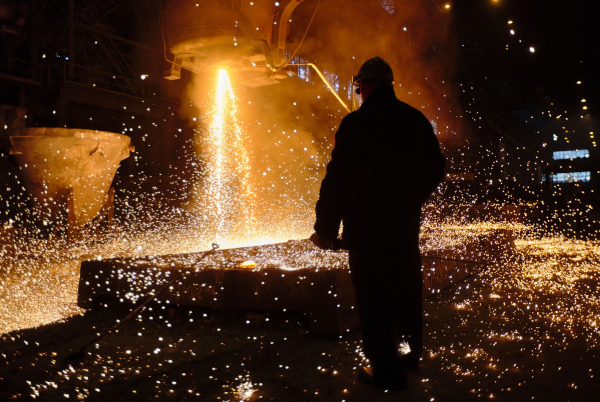
Ukrainian metallurgy is sinking: production has fallen sharply / Shutterstock
The Ukrainian metallurgical industry in January-April of this year demonstrated a decline in the production of key products. The largest reduction was recorded in the rolled products segment, while pig iron production remained almost at the same level as last year.
How and why did the indicators in metallurgy decrease?
Ukrainian metallurgists have reduced the production of steel and rolled products, writes Ukrmetalurgprom.
In the first four months of this year, Ukrainian enterprises produced 2.36 million tons of pig iron. This is 99.7% of the figure for the same period last year, meaning that the volumes have actually remained stable.
In contrast, steel production declined more noticeably. In January-April, Ukrainian steelmakers produced 2.25 million tons of steel, which is 7.4% less than last year.
The largest decline was recorded in the rolled segment. In four months, Ukrainian enterprises produced 1.80 million tons of products, which is 9.1% less year-on-year.
The industry notes that the metallurgy industry continues to operate in difficult conditions. Several factors are influencing the results:
- military risks;
- problems with logistics;
- unstable demand on world markets;
- difficulties with export;
- high production cost.
What does this mean?
- Ukrainian metallurgy has not yet returned to stable recovery.
- The rental segment is currently facing the most problems.
- The industry remains dependent on the logistics and export situation.
- War risks continue to put pressure on large industrial enterprises.
- A reduction in production could affect the country's foreign exchange earnings.
Note! Ukrainian metallurgy continues to operate in a survival mode. Despite the relative stability in pig iron production, the decline in steel and rolled steel production demonstrates that the industry is still very sensitive to war, logistical problems, and fluctuations in global demand. And until these factors change, a quick return to pre-war rates is not worth expecting.
What economic contribution does Ukrainian metallurgy make?
Before the full-scale war, the mining and metallurgical complex was one of the key pillars of the Ukrainian economy. Its contribution went far beyond the factories and mines themselves – the industry influenced exports, employment, taxes, and the development of entire cities, writes Krivbass.
In 2021, the mining and metallurgical complex provided 10.3% of Ukraine's GDP. This includes not only the products of metallurgical enterprises, but also:
- the work of contractors;
- related industries;
- the service sector;
- industry employee costs.
In fact, metallurgy created an entire economic ecosystem. Before the war, one metallurgical worker actually provided work for four more people in other fields.
According to experts, every 13th employee in Ukraine was associated with the MMC. Tens of thousands of people worked at large enterprises:
- Azovstal – 10.7 thousand;
- Ilyich MMK – 14 thousand;
- “ArcelorMittal Kryvyi Rih” – 19.5 thousand.
In some regions, metallurgy was actually a city-forming industry.
How does CBAM affect the metallurgy industry in Ukraine?
The European CBAM mechanism, which provides for the introduction of a carbon tax on imports to the EU, could seriously affect Ukrainian industry. This is primarily about metallurgy. This was stated by Stanislav Zinchenko, director of GMK Center, RBC-Ukraine reports.
According to him, Ukrainian steel producers have already begun to lose their competitive position in the European market.
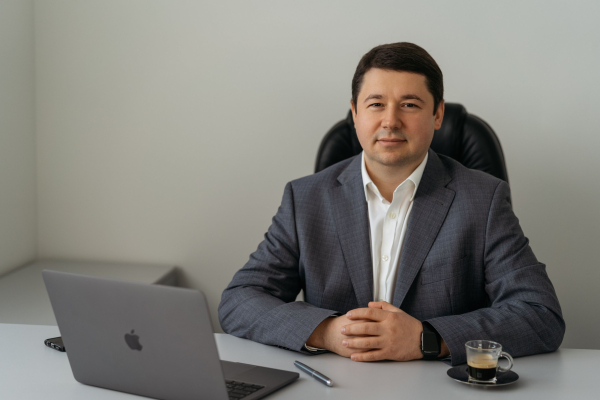
Stanislav Zinchenko
Chairman of the EBA Industrial Ecology Committee
Our early assessments were confirmed: CBAM is a tough trade barrier. For Ukrainian producers of long rolled products and semi-finished steel products, competitiveness on the EU market has already noticeably decreased. And this is not a narrow-sector problem, as metallurgy generates 7.2% of Ukraine's GDP, including supply chains.
Zinchenko notes that Eastern European countries received large-scale financial support for industrial modernization when they joined the EU. Ukraine is now facing similar requirements, but without the necessary investments.
The war was an additional blow. Due to Russian aggression, most modernization and decarbonization plans in the metallurgy industry were effectively put on hold.
Russian aggression destroyed the investment window. Before the war, every major steel mill had a decarbonization roadmap. Today, these projects are frozen, not only because of the war, but also because of rising energy prices, which made them financially unviable,
– the expert emphasized.
According to Zinchenko, the European Commission underestimated the consequences of CBAM for Ukraine. Brussels believes that the mechanism's impact on the Ukrainian economy will be only 0.01%, but GMK Center analysts estimate possible GDP losses at 2.1%.
Why is metallurgy important?
The MMC is considered one of the key sectors for Ukraine's post-war reconstruction. Steel is needed for bridges, roads, housing, energy facilities, and industrial infrastructure. The industry can also accelerate construction thanks to modular technologies.
For example:
- a one-story house can be built in two months;
- an eight-story building – about nine.
Another direction is “green” metallurgy.
European industry is transitioning to decarbonization, and Ukrainian MMC can supply raw materials for new steel production technologies with lower CO₂ emissions.
So, before the war, metallurgy was one of the main economic pillars of Ukraine – from exports and taxes to jobs and urban development. And it is this industry that can become one of the foundations of the country's post-war recovery.
Metallurgical giant ArcelorMittal has stopped production: what is known?
-
A conflict arose between ArcelorMittal Kryvyi Rih and Ukrzaliznytsia due to logistical problems, which forced the company to partially stop its production facilities.
-
The company claims that UZ is not delivering key raw materials for its iron foundry production. The company also says that there have been problems with the shipment of finished products.
-
Ukrzaliznytsia called on ArcelorMittal to return to a constructive dialogue, emphasizing the importance of stable logistics for the Ukrainian economy during the war.