
Main points
- Ukraine has proposed to Europe to start negotiations with Russia on an “airport truce”.
- Political scientist Oleg Lisny noted that without a fundamental condition, even the best proposal will not be effective.
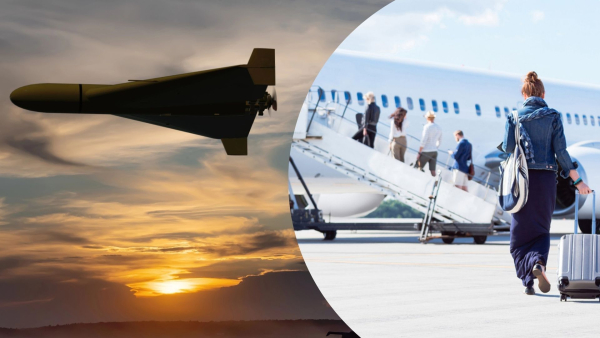
Ukraine has suggested that Europe start with a small step in negotiations with Russia and discuss a so-called “airport truce.” The idea comes at a time when the broader negotiation process is stalling and Moscow is showing no willingness to make real concessions.
Political scientist and president of the Politika think tank, Oleg Lisny, explained on Channel 24 that such initiatives can give partners a concrete tool for action. At the same time, according to him, without one fundamental condition, even the best proposal quickly runs into the same problem.
Can Europe launch an “airport truce”?
The idea of an “airport truce” is important for Kyiv primarily because it gives European partners not abstract participation in the peace process, but a specific direction of work.
Let us remind you! On May 11, Andriy Sybiga called on the European Union to become more actively involved in the negotiation process and help promote the idea of an “airport truce” – a mutual refusal of Ukraine and Russia from attacks on aviation infrastructure. Kyiv believes that such an agreement may also interest Moscow, because after the recent attacks, Russian airports, in particular in Moscow and St. Petersburg, are becoming increasingly vulnerable.
This is a small step that could start a separate conversation with Russia, create working groups, and try to check whether Moscow is capable of at least partial agreements.
The Ukrainian side is trying to provide tools to our partners, that is, to provide opportunities for small steps towards a big goal,
– said Lisny.
At the same time, he does not advise overestimating the idea itself, because the problem lies not in the technical format of the negotiations, but in the Kremlin's position. Russia, he said, is not looking for a compromise and does not want any real settlement, but continues to stick to its main goal – to force Ukraine to surrender.
We have a counterparty who wants nothing. He wants our surrender,
– the political scientist emphasized.
The idea of an “airport truce” can only be useful as part of a broader approach. If Europe and its partners try to limit themselves to the formula of an agreement without additional pressure on Moscow, Russia will perceive this not as a step towards de-escalation, but as another opportunity to buy time and continue to violate any rules.
Without active pressure on the Russian Federation, no ceasefire package or ceasefire regime will be effective, because Russia will violate it anyway. I support the desire to push Europe to take concrete steps in the right direction. But the pressure on Russia should only be increased. Then it can give results. If this does not happen, any good idea will run up against the wall of Putin's stupidity and arrogance,
– the political scientist emphasized.
That is, the idea itself is important for Kyiv primarily as a way to involve Europe in more substantive work.
By the way! On the evening of May 11, Volodymyr Zelenskyy said that Ukraine was preparing for new Russian attacks, emphasizing that there was no silence on the front that day and fighting continued despite the “truce” declared by Russia, the effect of which was just ending. Oleksandr Antonyuk suggested that Russia had already accumulated enough weapons for a new massive shelling and could resort to it in the near future.
The question is no longer just whether there will be a platform for conversation, but whether the partners will have the tools to force Moscow to take such agreements into account.
The topic of airports could become a painful one for Russia
Aviation expert Valery Romanenko suggests considering the idea of an “airport truce” not only as a diplomatic move, but also as a completely practical tool of pressure. According to him, Russian airports during a war cannot be perceived only as civilian infrastructure, because they also have military significance, and the stable operation of such hubs directly affects Russia's capabilities.
They use all these airports from a military point of view, without illusions. This must be clearly imagined and known. There is joint use, everything is different. During the war, this happens to the fullest extent. And therefore, the fewer airports they have, the lower their aviation potential from this point of view,
– said Romanenko.
He explained that this is about several things at once. First, about the military effect, because disruptions in the operation of airports weaken Russia's aviation potential. Second, about the diplomatic effect, because Ukraine has long been promoting not the illusion of “everything at once”, but a phased approach, in which we can talk about separate restrictions in the air and at sea. Such algorithms have already been discussed, but Russia did not go further, because it tried to bargain for a format that was beneficial only for itself.
At the same time, Ukraine has already shown that it can influence the operation of Russian airports even without massive strikes.
Let us remind you! On the morning of May 8, 13 airports in southern Russia were temporarily suspended after a drone hit the Aeronavigation administrative building in Rostov-on-Don, causing airlines to adjust flight schedules and experts to check the equipment. Ivan Stupak suggested that for Ukraine in this situation it was important to maintain tension around possible attacks so that the Kremlin would pull air defenses to Moscow and expose less protected regions.
For a large hub, the mere threat nearby is enough to stop flights, introduce a special security regime, and disrupt normal operations.
It is enough for one drone to appear in the area of the airport, because this is aviation security, the “Carpet” mode is introduced. And this work is disrupted for them,
– emphasized the aviation expert.
For a large country where air travel is of great importance, such disruptions quickly affect logistics, the economy, and people's mood. When this is repeated systematically, Russians are increasingly confronted not with the television picture of war, but with its direct consequences in their own daily lives.
Latest news regarding the ceasefire
There was no full-fledged lull from May 9 to 11, although the intensity of hostilities decreased somewhat. ISW noted that Russia continued limited ground operations, artillery and drone strikes, and used the pause itself for rotations, regrouping, accumulation of personnel, and transfer of reinforcements.
Mikhail Podoliak said that Russia is incapable of holding genuine peace talks and is constantly violating agreements. According to him, the only way to force Moscow to stop the war is through systematic long-range strikes on military, logistical, and oil and gas infrastructure, as well as through increased international pressure and sanctions.