
Main points
- Ukrainians who own or rent land plots are required to pay land tax or rent, depending on the status of the land user.
- Certain categories are exempt from paying land tax, such as people with disabilities of groups I and II, pensioners, parents of three or more minor children, war veterans, and under certain conditions, such as contaminated sites.
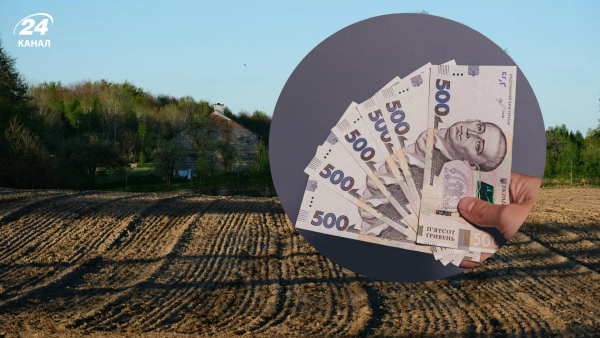
Who should pay taxes or rent for the city / Collage 24 / GettyImages
Ukrainians who own or rent land must pay for it. Therefore, it is worth checking the land documents to see if the appropriate fee is due in 2026.
Who pays land tax or rent?
The land tax is a mandatory payment. It is paid by Ukrainians who own or use land plots, explains the Main Department of the State Tax Service in the Rivne region.
Ukrainians have to pay land tax in one of two forms – land tax or rent for a plot of land that is in state or municipal ownership.
What fee to pay depends on the status of the land user. Everything is simple here. The owner of the land pays the land tax. A person who constantly uses the land plot also pays the tax.
But anyone who rents state or municipally owned land pays rent.
The obligation to pay tax arises as soon as a person becomes the owner of a land plot or acquires the right to permanent use of it.
Thus, the land tax payers are:
- land owners;
- owners of land shares;
- people who received state or communal land for permanent use.
Land users can be both individuals and companies. However, not all land users pay land tax.
If a land plot owned by the state or municipal government is used on a lease basis, the tenant does not pay land tax, but rent,
– the Traffic Police emphasized.
Please note! If a person has purchased, inherited, or received a land plot as a gift, he or she also becomes a land tax payer.
Who can avoid paying for land?
There are a number of preferential categories that may not pay for land. The Tax Code of Ukraine (clause 281.1, article 281) exempts from land tax:
- people with disabilities of groups I and II;
- pensioners by age;
- parents of three or more minor children;
- war veterans, etc.
At the same time, there are some cases when a person may not pay land tax at all. Lawyer Larysa Kis noted in a comment to Channel 24 that the tax is not paid, in particular, for land plots that are unsuitable for use due to the potential threat of their contamination by explosive objects.
At the same time, there are restrictions on the area specified by law, the State Tax Service notes. The tax is not paid only when the plot does not exceed the established limits:
- a plot of up to 2 hectares – for personal farming;
- up to 0.10 hectares – for individual summer cottage construction;
- up to 0.12 hectares – for gardening;
- up to 0.01 hectares – for the construction of individual garages;
- up to 0.10 hectares – for the construction and maintenance of a residential building, outbuildings and structures in cities;
- up to 0.15 hectares – for the construction and maintenance of a residential building, outbuildings and structures in urban-type settlements;
- up to 0.25 hectares – for the construction and maintenance of a residential building, outbuildings and structures in villages.
Important! You should check your land documents to correctly determine your status. This will determine not only what payment to make, but also the payment terms and the possibility of receiving benefits.
What happens if you don't pay for the land?
According to the legislation, it is the control body that independently calculates the amount of land tax for an individual. After that, the payer is sent a tax notice-decision along with a detailed calculation. It must indicate the cadastral number and area of the land plot, the tax rate, and the amount of the benefits provided.
The taxpayer is not responsible for the correctness or completeness of the calculation of this amount. However, he is obliged to pay the specified obligation in a timely manner and in full.
The law establishes a clear deadline for payment – 60 days from the date of receipt of the tax notice-decision. In case of violation of the deadlines, financial sanctions are provided, including fines and penalties.