
Main points
- Only 21% of Ukrainians are worried about automation and AI, and most do not see it as a serious threat due to other challenges related to the war.
- Professions with a high level of routine or digital processes, such as IT and media, are feeling the greater impact of automation, while lawyers and doctors are less concerned about this issue.

Which professions are not afraid of AI / Shutterstock
The fear of losing one's job due to the development of artificial intelligence is gradually spreading around the world, but in Ukraine the situation looks more restrained. Only one in five Ukrainians is worried about artificial intelligence, but in some professions there is almost no anxiety.
Are Ukrainians afraid of losing their jobs due to artificial intelligence?
According to the results of the study, only 21% of respondents admitted that they are worried about automation and AI, Work.ua writes.
Most Ukrainians do not yet perceive this as a serious threat – largely due to other challenges related to the war. At the same time, those who are worried often do not have a clear plan for how to adapt to the changes in the labor market.
Why is this important? The world is actively discussing automation and the replacement of people with algorithms, but in Ukraine this fear is not yet dominant due to other economic and security factors.
What professions are trying to master new skills?
The level of anxiety strongly depends on the profession. Most often, representatives of the following areas try to “play it safe” and learn new skills:
- IT, computers and the Internet – 14%;
- media, publishing – 13%;
- marketing and PR – 10%;
- finance and banking – 9%.
These are the areas that are most likely to experience the potential impact of automation. However, there are professions where the level of anxiety is minimal. The least concerned about automation: lawyers – 52% do not see a threat, doctors – 51%.
And some respondents are generally confident in their “irreplaceability.” Among them:
- educators and top managers – 48%;
- hotel and restaurant sector – 47%;
- builders – 45%;
- transport industry – 44%.
What does this mean? The results show an interesting trend: fields with a lot of routine or digital processes are more anxious. In contrast, professions related to people, physical work or complex decisions are much calmer.
So, despite the global hype around AI, most Ukrainians do not yet see it as a direct threat. But those professions that are already facing automation are starting to adapt faster than others.
What professions will AI not replace?
Bill Gates says that artificial intelligence is already actively changing the labor market, automating routine processes and helping businesses work faster. At the same time, technology is not yet able to completely replace human experience, intuition and creativity in key areas, writes Lad Вible.
The following professions will remain in demand:
1. Programmers and developers
Although modern algorithms can already write code, this is not enough to create complex systems. Humans are needed to monitor, correct errors, and develop the AI tools themselves. In fact, programmers control the technology, not the other way around.
2. Biologists
In medicine and science, AI works well with data analysis, but it is not capable of generating fundamentally new ideas. It is people who form hypotheses, conduct research and make breakthrough discoveries. Technology here is only a tool, not an engine.
3. Energy professionals and industry engineers
Energy system management is a complex process that requires experience and quick decisions in critical situations. From traditional energy to “green” – it is currently impossible to fully automate these processes.
Which professions will be the most scarce and valuable?
First of all, attention will be paid to individual people. This was stated by Olga Gorbanovska, head of People Advisory Services at EY Ukraine, UNIAN reports.
Specialists who are able to “bridge” the world of technology and people come to the fore. These are not just IT specialists, but those who help people adapt to changes faster and use new tools effectively.
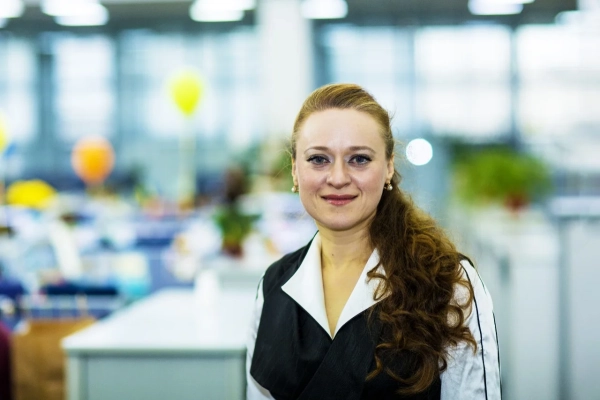
Olga Gorbanovska
Head of People Advisory Services EY Ukraine
This is the inertia of people in mastering new technologies. And although intuitively we want to move there faster, this resistance prevents people from making this move. Therefore, professions that will allow us to learn faster and reduce people's resistance to new technologies will be number one
The second important direction is the architecture of the work environment. It is about creating conditions in which a business is built around a person – their experience, needs, and efficiency.
This is the architecture of the workplace, the architecture of the workflows and the architecture of the technology platforms that allow you to build an operating business model around the human experience. These are the goals, the business strategy, the workflows, the technologies and the people,
– explained Gorbanovska.
Another key area that is rapidly gaining momentum is biotechnology. Demographic changes and an aging population make this sector critically important.
What is known about the 2026 labor market in Ukraine?
-
Demand for remote work in Ukraine exceeds supply, with only 7% of vacancies being remote. Remote work is popular due to war, relocation, the desire for flexible schedules, and restrictions for certain groups of the population.
-
67% of employers in Ukraine report a shortage of workers, a record since the start of the full-scale war. In addition to the labor shortage, businesses are hampered by rising raw material prices, security risks, and energy supply disruptions, although pressure and corruption remain less significant problems.