
Main points
- Scientists at the Max Planck Institute have discovered that lithium dendrites can cause internal short circuits in solid-state batteries due to hydrostatic pressure, rather than electronic leakage.
- New approaches to solid-state battery design, such as stronger electrolytes and protective coatings on electrodes, could improve the safety and efficiency of future batteries.
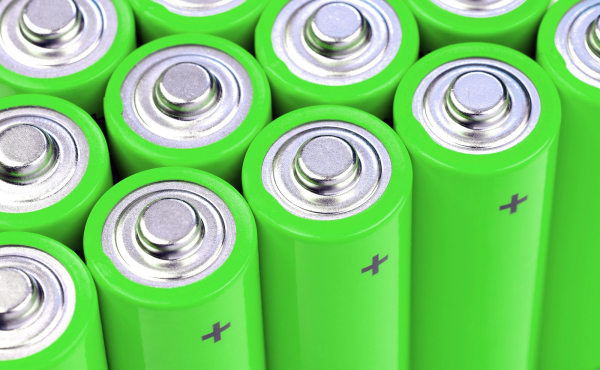
The main problem of solid-state batteries can be solved / Depositphotos
Solid-state batteries are seen as the future of smartphones, laptops and electric cars. They are the first in line to replace lithium-ion batteries because they are safer and last longer. But scientists have found that even such batteries can fail suddenly, becoming potentially dangerous.
Researchers from the Max Planck Institute have figured out exactly how lithium dendrites destroy solid-state batteries. It turned out that the problem is not in electron leakage, as previously thought, but in internal pressure, which literally cracks the ceramic electrolyte and causes a short circuit, writes Interesting Engineering.
What solid-state batteries are we talking about?
Solid-state batteries have long been considered a prime candidate to replace conventional lithium-ion batteries. They promise higher energy density, longer life, and significantly better safety. The main difference is that they use a solid ceramic electrolyte instead of a flammable liquid electrolyte.
This solution should make batteries more reliable, but in practice a serious problem has arisen that has been hampering mass production for years – the formation of lithium dendrites.
Dendrites
Microscopic structures of lithium that appear during charging. They grow from the electrode into the battery and can penetrate the solid electrolyte. The result is an internal short circuit, rendering the battery unusable or even dangerous.
For a long time, there was a popular theory among scientists that there was a leak of electrons in front of the tip of the dendrite. It was believed that this was what triggered the accumulation of new lithium inside the ceramic layer and gradually destroyed its structure.
However, a new study by a team from the Max Planck Institute for Sustainable Materials, published in the journal Nature, has shown a different picture.
What did scientists find?
To study the breakdown process in detail, the researchers analyzed battery samples in a vacuum and at cryogenic temperatures. This approach avoided exposure to oxygen, moisture, and even the microscopic beam itself, which could distort the results.
During the study, the scientists tested the lithium that had gotten inside the cracks and found no evidence that the metal was accumulating ahead of the dendrite, effectively weakening one of the leading theories about what caused the short circuit.
Instead, the researchers concluded that the main culprit is hydrostatic pressure inside the dendrite itself . Although lithium is a very soft metal, this internal pressure creates such a strong tensile stress that the hard ceramic electrolyte simply cracks.
Study leader Dr. Yuwei Zhang explained this with a simple analogy: although lithium is soft, like a jelly bean, it is able to penetrate ceramics in the same way that a continuous stream of water can gradually penetrate stone.
It is the buildup of pressure that ultimately leads to brittle failure of the electrolyte.
Why is this a useful find?
This discovery could have a significant impact on the development of new solid-state batteries, allowing manufacturers to work more precisely on protecting the cells from such damage.
Possible solutions already being considered include stronger solid electrolytes that can better withstand stress, microscopic cavities to redirect dendrite growth, and special protective coatings on lithium electrodes that reduce the formation of dendrites during charging.
If these approaches prove effective, it could accelerate the emergence of smartphones with longer battery life, safer batteries, and electric vehicles with longer ranges.