
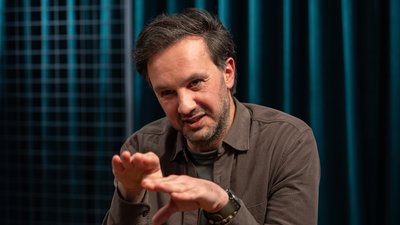
Heorhiy Tykhyi is the spokesman for the Ministry of Foreign Affairs of Ukraine. Until July 2024, he was the communications advisor to the Minister of Foreign Affairs of Ukraine Dmytro Kuleba. Before that, he worked as a journalist. In particular, in 2014-2018, he was a producer of the first German TV channel ARD in Ukraine. In August 2014, together with three fellow reporters, he was surrounded in Ilovaisk, Donetsk region.
Suspilne met with Georgy Tykhy to discuss the Ministry of Foreign Affairs' priorities in the 2026 negotiation process, cooperation with the US and the EU, and current issues of providing consular services — in particular, to men of draft age and people leaving temporarily occupied territories.
How did the meeting between Trump and Putin in Alaska affect the further course of Ukraine's contacts with the United States? What changed in these contacts after Keith Kellogg's resignation? How can Ukraine cooperate with other countries to return Ukrainians to their homeland? We publish the main theses. Watch the video version of the conversation at the link.
Russia continues to insist on maximalist and unrealistic demands in the negotiations , such as the unilateral withdrawal of Ukrainian troops from the territory of the Donetsk region.
For this language to change, much more pressure is needed — both economic and on the battlefield. With the intensification of this pressure and the approach to the point of stabilization of the front, an increase in the number of our long-range strikes on legitimate Russian targets — in the complex, this can force Russia to at least seek some realistic diplomatic solutions. First of all, a ceasefire.
A whole series of negotiations took place over 2025. I was there a year ago in Jeddah – that was such a turning point. Then – Istanbul, the first, the second, these meetings of delegations. Then – the work of the trilateral format.
These meetings allowed for the release of a large number of our people , primarily prisoners of war, but also civilian hostages. I am not saying that these meetings alone started the exchanges – there were exchanges before, and, in fact, during these meetings. But, apparently, this process stimulated a larger number of people who were still exchanged.
And it seems to me that for this reason alone it was worth going and meeting, and even listening to some pseudo-historical lectures, which were also held during this time.
Every decision of our partners to increase pressure on Russia, to support Ukraine, to make additional investments in our defense, every Ukrainian long-range strike on Ust-Luz, on Primorsk, on other pain points of Russia – this is a strengthening of our negotiating position. That’s how we, as diplomats, view it. This is all – a strengthening of our position. The same goes for the track of responsibility – the Special Tribunal and everything else.
We have demonstrated to the whole world that Ukraine is not an obstacle to negotiations. And this is very important, because they tried to blame us from the very beginning. And I think that even from the point of view of the new administration in the White House – also from the very beginning, everything was not clear from their point of view.
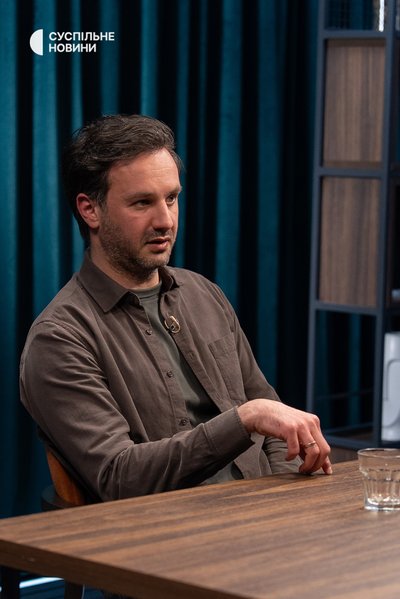 Spokesperson for the Ministry of Foreign Affairs of Ukraine Heorhiy Tykhyi during an interview with Suspilne, Kyiv, April 15, 2026. Suspilne News/Olexander Sova
We take into account the factor of the midterm elections in the United States in our analysis and strategic planning. We understand that sometime from the end of the summer the United States will be immersed in its internal affairs. Therefore, we view the coming months as a window of opportunity to finally pressure Russia into some realistic steps, primarily a ceasefire.
For the Trump administration, it would be a great development if the fighting in Ukraine could be stopped. But it is important to focus their attention on the fact that it is Russia that is the obstacle, not Ukraine.
Now they are really focused on the Middle East, on Iran. In principle, this is the only reason why these meetings in the trilateral format of Ukraine — Russia — the USA are not continuing. We are ready for these meetings and have repeatedly said so. We hope that after the negotiations with Iran they will be able to meet with us. Maybe come here. At least, such an invitation exists for them, it is valid. And there are signals from them about their readiness to come. But if it is a meeting or contacts in some other format, we are also ready for them.
The skill with which Putin personally and the Russian side in general manipulate partners – both the United States and everyone else – is a very sophisticated art of manipulation, honed by the KGB since the 1960s, since the Cold War.
But we also work very actively with the American side, with partners. We do not manipulate, but convey information, factually. Our big difference with the Russians is that we do not need to remember how we lied yesterday.
The meeting between Putin and Trump in Alaska, of course, changed the dynamics. But we must understand that, in principle, we dragged it out for this meeting. It seems to me that the Ukrainian strategy provoked Putin to this meeting. Because Ukraine was quite proactive all last year. And it prompted the Russians to either look for some kind of “ceasefire” for a few days, or to offer Istanbul as a meeting place, or something else.
David Kushner and Steve Witkoff are still representatives of President Trump. And he makes the decisions, and they, rather, act as emissaries, a kind of shuttle diplomacy. The decisions are still made by President Trump.
The Ministry of Foreign Affairs is involved in the negotiation process all the time – at the level of preparing theses, preparing technical terms of reference, and coordinating positions. That is, the fact that you do not see, for example, a representative directly at the table does not mean that the Ministry of Foreign Affairs is not involved in the process.
Besides, why is there no, for example, a foreign minister – because this is too high a level for this format of negotiations. This is the political level. The foreign minister. Lavrov is also not there on that side.
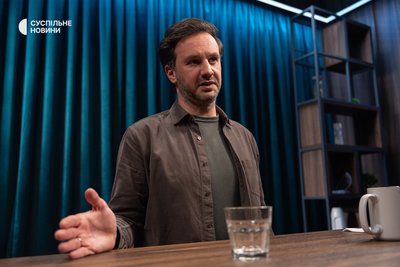 Spokesperson for the Ministry of Foreign Affairs of Ukraine, Heorhiy Tykhyi, during an interview with Suspilne, Kyiv, April 15, 2026. Suspilne News/Olexandr Bramsky
Now we have a great job (after Budanov's arrival in the President's Office – ed.). And in general, I now have the feeling that this entire team that exists under the president – both in the President's Office, in the government, and in the Foreign Ministry – is simply a single system that works to specifically achieve real goals, namely – victory in the war, achieving peace.
I don't have the feeling right now that there is some kind of tug-of-war, or that someone is replacing someone else. In fact, the talk about Bankova taking away all the powers from the Ministry of Foreign Affairs is as old as the world. It existed before Dmytro Kuleba, and under another president, and under all other previous presidents.
European partners take the risks of Russian aggression very seriously. It depends, of course, on the specific partners. In the Baltic countries and Northern Europe, no one needs to be convinced that this is a real threat. The further away from the border with Russia, the greater the severity of this threat, of course. Therefore, this situation is heterogeneous.
But I can definitely confirm to you that in general, on average, awareness of the reality of the Russian threat and, God forbid, some major war in Europe has increased.
Russian provocations with drones and incidents over airports were aimed at the societies of these countries in an attempt to prove: look, they gave everything to Ukraine, and now we have nothing to defend ourselves with.
Well, and in principle, it's not 2022 outside anymore, and Ukraine is not just asking for support and military assistance packages – we are already developing mutually beneficial cooperation with these countries. And it's not just about means – it's technology, it's knowledge, experience. That is, Ukraine today is, as they say, a two-way street, that is, it's mutually beneficial cooperation.
The reality has changed. If you look at what Ukraine has done in the Gulf states recently, I honestly cannot understand how anyone in NATO could be against the integration of Ukraine and Ukrainian forces into the collective security of the Alliance. But it will take some time for us to approach this conversation and change this perspective. I know how it works. There is a certain inertia in diplomacy when people have outdated stereotypes.
We are coordinating very closely with our European partners on peace negotiations. And we have insisted from the very beginning that they should be part of the process.
We always inform them about what happened in the negotiations. We coordinate our position with them before we enter into these negotiations. And we make every effort to ensure that they do not get the impression that they have been written off from the negotiations.
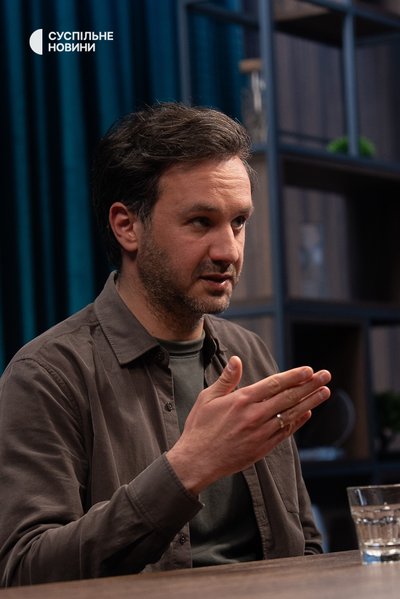 Spokesperson for the Ministry of Foreign Affairs of Ukraine Heorhiy Tykhyi during an interview with Suspilne, Kyiv, April 15, 2026. Suspilne News/Olexander Sova
The election campaign in Hungary was marked by toxic anti-Ukrainian propaganda from Viktor Orbán. We deeply regret that he chose Ukraine as the theme of his election campaign and made the manipulation of the topic of Ukraine the centerpiece of his election campaign.
But we are also extremely pleased that the Hungarians rejected these manipulations. I am personally pleased that the Hungarian people decided not to consume all this and said: “Goodbye.”
Minister Andriy Sybiga said yesterday or the day before yesterday that this is generally a signal to other parties and movements in the European Union that are trying to use the topic of Ukraine as a pretext for manipulation, some anti-Ukrainian rhetoric, and mobilization of the electorate through some lies about Ukraine – it doesn't work.
We really want to heal these relations, which have been wounded many times over the past years. Not on our initiative, but unfortunately by the previous Hungarian government. For our part, we are ready to work now to heal these wounds so that we can have normal bilateral relations.
We have very realistic ideas about Peter Magyar and are convinced that as Prime Minister of Hungary, he will primarily pursue the interests of Hungary — its national interests.
But there is hope that there will be a willingness on the Hungarian side – and the first signals indicate this – to build pragmatic, normal relations. And, of course, not to resort to such unacceptable blockages as practiced by Viktor Orban.
Now, fortunately, the pause that occurred in the adoption of laws by the Verkhovna Rada has been overcome. We at the Ministry of Foreign Affairs are very happy about this. I can confirm this to you for sure, because for us these are additional negotiating arguments.
We all understand that the return of people to Ukraine from abroad is possible, perhaps, only on a voluntary basis. Because how can you forcibly return someone?
I can confirm that for several years now we have been having substantive discussions with the European Commission in general – because, apparently, it is not just about individual national governments, but about joint solutions for the European Union – about finding programs and incentives for the return of people. And I understand that everyone is interested in the return of men, because this is so painful, and this is one of the divisions that exist in our society.
I am not ready to speculate on this topic. We have offered certain voluntary opportunities. For example, the creation of a separate legion – that is, a unit of the Armed Forces for those men abroad who have decided to join the ranks of the Armed Forces of Ukraine. The opportunity to undergo training in Poland according to the best standards.
This opportunity, by the way, is still open. And certain men do come there. To be honest, not many.
There can be different incentives, even financial ones – some kind of payments to encourage people to return to Ukraine.
This is a very complex issue. If we are talking about people in general, and not just men, this also requires security conditions in Ukraine itself. Well, ideally, of course, if a ceasefire were achieved, it would change this dynamic completely. Secondly, the presence of security can be, for example, in the number of underground schools or kindergartens.
The rules about the need for an updated military registration document to receive consular services are the same everywhere : both in Ukraine and abroad. So, if you want to receive consular services, update your data – in the “Reserve” or somewhere – present it and, please, receive services.
I think the best indicator that there is no problem with access is that I asked our consular department today if there are any complaints from men of military age abroad who cannot receive consular services — there are no such complaints as of today. There are zero.
When it left the media, it seemed that the Ministry of Foreign Affairs had stopped providing services altogether. As of now, this problem does not exist. Men receive services according to new rules, which are the same for everyone, and they provide military registration documents.
Cases where young people born in the occupied territories do not have a Ukrainian passport but want to return have become more widespread.
There must be some form of identification of this person, because this person could be anyone. They could be young, patriotic, good people who want to return. Or they could be people who were simply sent away by Russia.
If a person does not have a passport, but the fact of citizenship is recorded in the Unified State Demographic Register, they are issued a return certificate, and they return. That is why the problem arose that the longer the occupation lasts, the more young people appear who could not obtain this confirmation.
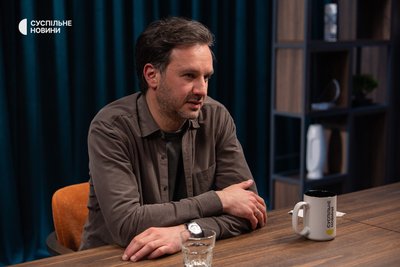 Spokesperson for the Ministry of Foreign Affairs of Ukraine, Heorhiy Tykhyi, during an interview with Suspilne, Kyiv, April 15, 2026. Suspilne News/Olexandr Bramsky
The Ministry of Foreign Affairs, understanding this problem with young people, has come up with the initiative of an experimental return procedure , simplifying the procedures for identifying these citizens, young people, for their easier return to Ukraine. This project provides for the possibility of a video check by the consul with a number of people who can confirm that this person is a Ukrainian, a citizen of Ukraine. A check that will allow issuing a return certificate.
We are looking for ways to liberalize. This resolution passed all approvals and was ready to be submitted to the government in March. After discussion in the committee, it was returned for further revision by certain bodies.
I hope that we will quickly finalize them now, and we will have an experimental order. It is temporary, it will be in effect for a year. We will see how it works. And if it is successful, then we will continue this practice.
Our priority this year is to establish a new subject role as a security partner. The success that we have seen in the Gulf states will be scaled to other regions. And we see how this example has stimulated enormous interest in Ukraine, in other regions: Africa, Latin America, Asia, the rest of the Middle East. They see strength in Ukraine. And this projection – I think this is a global task for this year.
But, perhaps, the global task is, of course, strengthening our positions to end the war, finding diplomatic solutions acceptable to stop the fighting. Well, and in general, strengthening Ukraine's positions.