
Main points
- Archaeologists have discovered a papyrus fragment of Homer's “Iliad” inside a Roman-era Egyptian tomb in the city of El Bagnas.
- The find includes gold tongues, statuettes, and ceramic vessels, indicating Greco-Roman cultural influence and religious affiliation in the region.
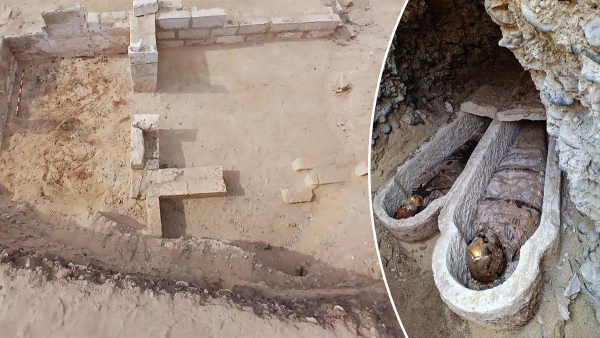
Ancient Egyptian mummy buried with fragment of Homer's Iliad / Channel 24 Collage/Egypt's Ministry of Tourism and Antiquities
An international team of researchers has discovered a unique Roman-era burial site in the Egyptian city of El Bagnas. Among traditional ritual artifacts, archaeologists have discovered an unexpected object that links ancient Egyptian beliefs with masterpieces of ancient Greek literature.
What secrets did the ancient tomb hide?
A joint Spanish-Egyptian archaeological mission, which included specialists from the University of Barcelona and the Institute of the Ancient Near East, has successfully completed another stage of excavations in the Minya governorate. The work was carried out on the territory of the ancient city of Oxyrhynchus, which is today known as El Bagnas. The main discovery of the season was a necropolis from the Roman period, the structure and contents of which provide extremely important data on how burial customs transformed during the transition from the Ptolemaic era to Roman rule in Middle Egypt, writes Greekcitytimes.
The expedition was led by Dr. Maite Mascourt and Dr. Esther Pons Mellado. Their most sensational find was a rare fragment of papyrus that the researchers discovered inside one of the mummies. The document contains an excerpt from the second book of Homer's famous “Iliad”. In particular, the text corresponds to the part known as the “Catalogue of Ships”, which lists in detail the Greek forces that set out on a campaign against Troy.
According to Dr. Hisham El-Leiti, Secretary-General of the Supreme Council of Antiquities, the discovery of a classical Greek literary text in such a context is exceptional. Previously, most papyri at Oxyrhynchus were found in ancient garbage dumps, not inside tombs. This fact indicates that the local elite were not only influenced by Greek culture, but also actively studied its literary traditions, making a conscious choice to include such texts in their funeral rituals.
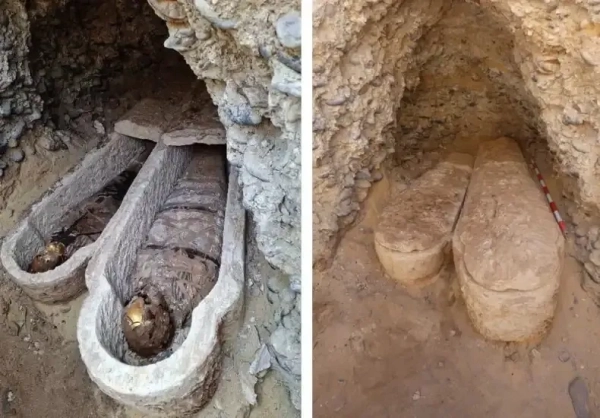
Tomb and mummy inside / Photo Egypt's Ministry of Tourism and Antiquities
The excavations were carried out to the east of Ptolemaic Tomb 67. Archaeologists discovered a trench containing three burial chambers built of limestone blocks. Due to their age, which is about 2,000 years, and the activities of tomb robbers in the past, these structures have survived only in fragments. However, inside the chamber, scientists recorded ritual practices that are extremely atypical for Egyptian archaeology.
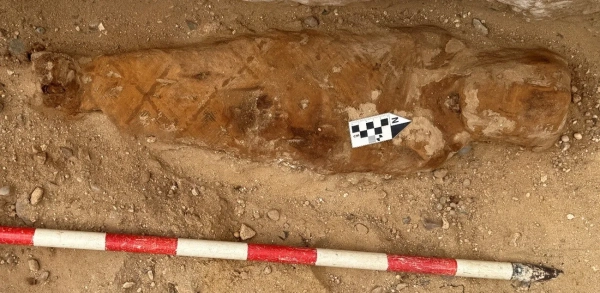
Burial / Photo Egypt's Ministry of Tourism and Antiquities
In particular, large ceramic vessels containing the charred human remains of an adult and an infant, wrapped in textiles, were found. Alongside them lay the skulls of felines. This combination of cremation and traditional burial suggests deep cultural exchange and religious connections.
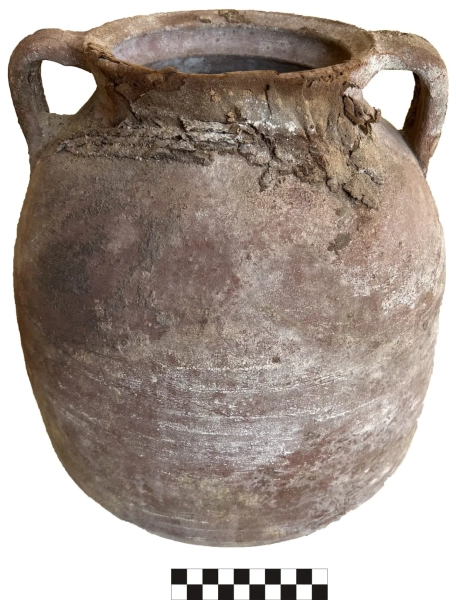
Ceramic vessel / Photo Egypt's Ministry of Tourism and Antiquities
The discovery of terracotta and bronze figurines, including a depiction of the god Harpocrates on horseback and a small figure of Cupid, also confirms the Greco-Roman influence. These objects were used as funerary objects and reinforce the evidence for mixed cults in the region.
In the southern sector of the excavation, in an underground structure called Tomb 65, researchers have exhumed several mummies from the Roman period. Some of them were wrapped in linen bandages, decorated with geometric patterns, and placed in painted wooden sarcophagi. Although the coffins were badly damaged by looters, they still show traces of their original pigmentation.
One of the most striking elements of the find were three gold tongues and one copper tongue placed in the mouths of the deceased, writes Arkeonews. According to ancient Egyptian beliefs, these amulets were supposed to provide the deceased with the ability to speak during the judgment before the god Osiris in the afterlife. The use of gold plates in combination with the architecture of the hypogeum and the additional application of a thin layer of gold to the surface of the mummies directly indicates the high social status of the buried individuals. Even though the ancient thieves stole most of the valuables, they left these metal amulets.
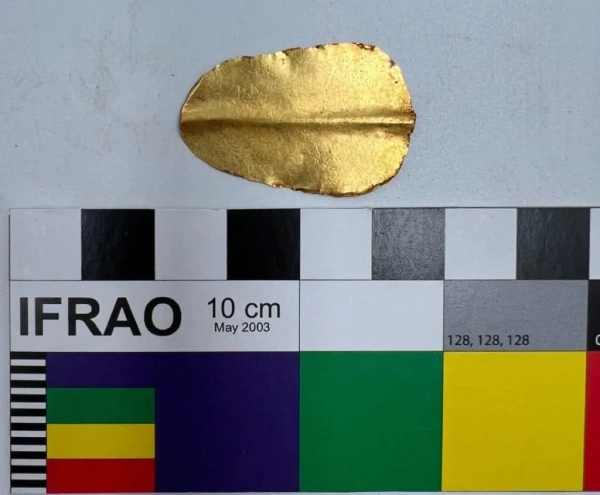
Golden Tongue / Photo Egypt's Ministry of Tourism and Antiquities
Egyptian Minister of Tourism and Antiquities Sherif Fathy noted that the results of the mission enrich the historical heritage of the Minya region and demonstrate the complexity of social life in the Nile Valley during the time of foreign rule.
All the artifacts and papyrus found are currently undergoing conservation and laboratory analysis. Scientists hope that further papyrological study of the Iliad text will help to better understand the level of education and the spread of classical literature in the provinces of Upper Egypt.