
Main points
- The use of generators on balconies is prohibited due to the risk of carbon monoxide poisoning and fires.
- Alternatives include portable battery stations, which are safer and do not create noise or emissions.
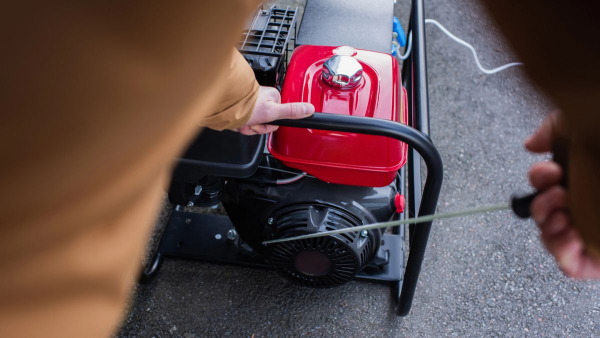
Why a generator on a balcony is a time bomb / Depositphotos
The desire to provide light to the home during long power outages often pushes residents of high-rise buildings to take risky steps. Installing a generator on the balcony seems to many to be a convenient solution, but behind this decision lies a hidden threat that can cost not only significant fines, but also lives.
What are the risks of operating a fuel device in dense urban areas?
The use of gasoline, diesel, or gas generators inside residential premises, including on balconies, terraces, or in corridors, is strictly prohibited by fire safety regulations, writes 24 Kanal .
Carbon monoxide
The main reason for this ban is the release of carbon monoxide gas during the operation of the internal combustion engine. This gas is colorless and odorless, so residents may not notice the danger until the first symptoms of poisoning appear, which often lead to fatal consequences.
Even open windows on a glazed or open balcony do not guarantee safety, as exhaust gases can accumulate indoors or reach neighbors through vents and windows.
Fires
In addition to the chemical hazard, there is a huge risk of fire. Generators get very hot and vibrate when operating, which can cause the device to tip over or ignite nearby objects.
The presence of flammable fuel in the tank significantly increases the risk of explosion. Over the past few winters, Ukrainians have repeatedly seen news reports of gasoline generators exploding right on the balcony of an apartment.
Experts emphasize that balconies are not technically designed for the operation of such equipment, and sparks or hot parts of the mechanism can easily damage balcony structures.
Noise pollution
Another critical factor is noise pollution. Most household gasoline models create noise at a level of 75 to 95 decibels. According to current sanitary standards, the permissible noise level in apartments during the day is 55 decibels, and at night – no more than 45 decibels. Thus, the operation of a generator under the windows or on the balcony is a direct violation of the neighbors' right to peace.
Constant vibration can also be transmitted through the walls and ceilings of the house, creating discomfort for the entire entrance.
The law provides for punishment
Ukrainian legislation provides for strict liability for such violations. If a generator is installed on a balcony, representatives of the State Emergency Service may impose an administrative penalty. The fine for violating fire safety requirements ranges from 1,700 to 3,400 hryvnias. In the event of complaints about noise, the police have the right to draw up a report, according to which the violator is also threatened with a fine, the amount of which increases with repeated violations. The source of noise may even be confiscated.
What are the alternatives to generators?
For apartment dwellers, there are safer and more convenient alternatives. Experts recommend using portable battery stations, such as EcoFlow, Anker, Bluetti, or Jackery. They operate without noise or emissions, and can be charged from a regular outlet.
If the use of a fuel generator is critically necessary, it should be installed exclusively outdoors at a distance of at least 6 meters from any windows, doors or walls of the house. It is recommended to store fuel for such devices in special canisters with a volume of no more than 40 liters in separate outbuildings at a distance of at least 7 meters from the dwelling.