
Main points
- In 2009, drilling at the Krafla geothermal field in Iceland accidentally encountered magma at a depth of 2,100 meters, marking a breakthrough in volcanology.
- The incident allowed scientists to study the volcanic glass that formed and improve their understanding of magma behavior, opening up opportunities for the development of superhot geothermal energy.
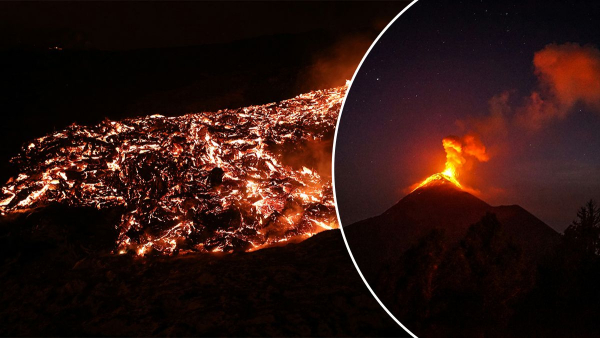
What is happening deep inside the Earth / Collage by Channel 24/Unsplash
Have you ever wondered what would happen if you accidentally or intentionally drilled a hole in the Earth's crust all the way to the magma? The answer to this question was found back in 2009, when a drill bit unexpectedly encountered molten rock while working on a geothermal field. The discovery sparked a wave of concern about the unknown consequences, but at the same time provided a unique opportunity for research.
What does direct contact with a hot substance at great depth look like?
In 2009, an event occurred at the Krafla geothermal field in Iceland that initially looked like a serious technical error but ended up being a real breakthrough in volcanology. While performing planned work, a drill encountered molten magma at a depth of about 2,100 meters. On a geological scale, this is considered a relatively shallow depth, writes 24 Kanal .
Before this incident, intervention in magma chambers was considered an extremely dangerous venture due to a lack of experience and accurate forecasts. Researchers assessed the risks on a wide scale: from a simple technical failure to fears that mechanical damage to the reservoir shell could trigger a full-fledged volcanic eruption.
However, the results of the 2009 incident exceeded all expectations of the scientific community. When the red-hot magma came into contact with technical drilling fluids, it instantly cooled, turning into sharp fragments of fresh volcanic glass.
These fragments have come under the close scrutiny of Professor Ben Kennedy, a specialist at the University of Canterbury, who has been analysing them in detail since 2014. For scientists, these fragments are valuable as time capsules, as they contain primary information about the conditions deep underground.
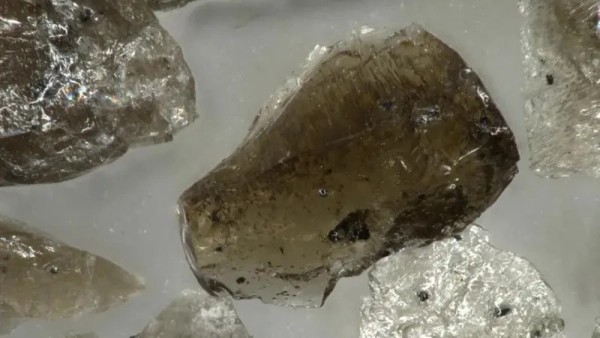
Volcanic glass extracted from the Krafla geothermal deposit / Photo by the University of Canterbury
- The study, conducted in collaboration with experts from the Ludwig Maximilian University of Munich and subsequently published in the journal Nature, provided answers to important questions about the pressure, temperature and chemical composition of gases inside active systems. Understanding how magma behaves under external mechanical influence allows us to create much more accurate models for predicting future natural disasters.
- In addition, the data obtained open up opportunities for the creation of stationary research centers directly above magmatic sources, which previously seemed completely impossible.
- The new knowledge is critical not only for Iceland, but also for other regions with high volcanic activity, including New Zealand. The data from the Krafla deposit confirms that drilling into magma chambers can be a completely safe process if the appropriate techniques are followed.
- Finally, it also provides an impetus for the development of super-hot geothermal energy, which in the future can become a reliable source of clean renewable energy.
Professor Kennedy compares the process to a space mission, noting that entering a magma chamber for the sake of scientific excitement is equivalent to a man's trip to the moon. To interest new generations in modern science, the team of researchers even created a special educational game where children can try on the role of pioneers of the underground depths.