
Main points
- According to the results of the first quarter of 2026, the business confidence index in Russia's retail trade fell to its lowest level since 2006, amounting to minus eight points.
- Business sentiment is declining due to reduced retail turnover, consumer austerity, high interest rates, increases in VAT and excise taxes, and regular internet outages.
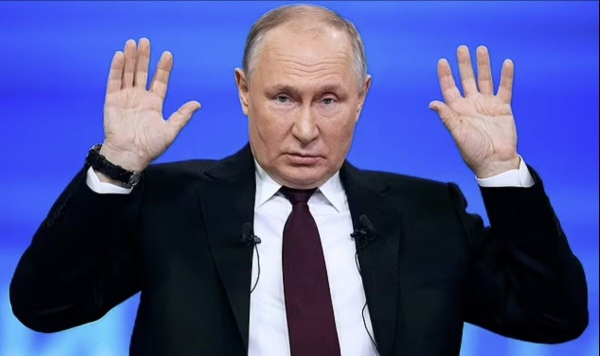
Putin has collapsed retail in Russia / EPA
According to the results of the first quarter of 2026, the retail business confidence index fell to its lowest level since 2006. This means that businesses are underestimating their capabilities and are on the verge of survival.
What is the business sentiment in Russia?
The business confidence index is based on businesses' assessment of inventory levels, the current economic situation, and future forecasts, The Moscow Times writes.
In January-March, the index was minus eight points (four points lower than the value for the first quarter of last year), which suggests that the number of entrepreneurs who assess the situation as unfavorable exceeds the number of optimists.
Overall, business sentiment is declining amid a sharp decline in retail turnover in Russia:
- According to Rosstat, in February this indicator increased by only 0.3% in annual terms (versus 0.7% in January).
- This result has become worse since spring 2023.
The consumer has gone into “savings mode” amid slowing income growth, still high interest rates on loans, and increases in VAT and excise duties,
– says Finam economist Olga Bilenka.
Another factor in the deterioration of business sentiment has been regular internet outages – outages can negatively affect the overall turnover of online trade in the country.
What's wrong with Russia's budget deficit?
Russia's budget deficit in the first 2 months of 2026 widened to 3.45 trillion rubles, or 1.5% of GDP, almost reaching the annual forecast.
According to the Russian Ministry of Finance, the deficit in February was at the same level as in January, which was 1.73 trillion rubles.
- The fact is that while in two months state spending increased by 5.8% year-on-year to 8.22 trillion rubles, revenues decreased by almost 11% to 4.77 trillion rubles due to oil and gas fees, which fell by 47%.
- At the same time, growth in non-oil and gas revenues has also slowed.
Interestingly, economist Ivan Us told Channel 24 that late last year the Russian government reported that the budget deficit was supposedly 5.7 trillion rubles. However, the former first deputy head of the Central Bank of Russia stated that the real deficit was actually somewhere around 8 trillion.
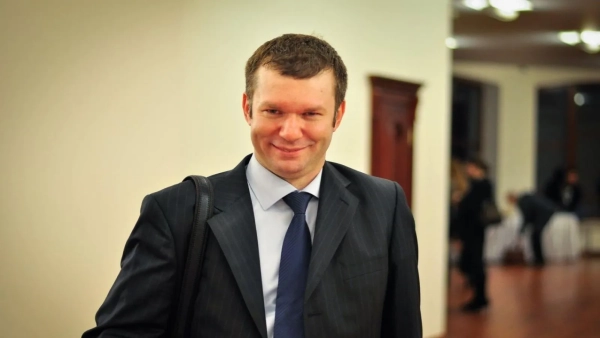
Ivan Us
Chief Consultant, Center for Foreign Policy Studies, National Institute for Strategic Studies
The thing is that the Russians postponed certain expenses from 2025 to 2026. And such a significant deficit in 2 months of 2026 is the reason for this.
Us explains that the Russians believed that they would be able to cover the deficit with money from oil and gas revenues. However, in January and February of this year, oil prices were quite low. In addition, Us names another factor that negatively affects the coverage of Russia's deficit. This is the strong ruble exchange rate.
Business problems in Russia
-
In 2025, VkusVill closed 286 stores in Russia, reducing the total number by 12.7% to 1,973 points, which is explained by the optimization and acceleration of delivery.
-
The number of stores in Russia has decreased for the first time since 2000 due to rising taxes and increased competition. This applies to all retail outlets – from grocery stores near the house, supermarkets and fruit stands to communication salons and clothing stores.
-
Magnit, one of Russia's largest retailers, has suffered losses of over 22 billion rubles for the first time in 20 years due to expensive loans and customer savings.
-
Russian airline Azimut has seen its net profit fall 30.9% in 2025, with a loss on sales of 3.608 billion rubles. The company is dependent on government subsidies due to sanctions, inflation, and technological dependence on imported parts.