
Main points
- At Shark Bay, scientists studied Asgard archaea, which are the closest relatives of eukaryotes, which may explain the evolution of complex life.
- Electron cryotomography has shown the interaction of archaea and bacteria through nanotubes, which may be a model for the emergence of the first complex cells on Earth.
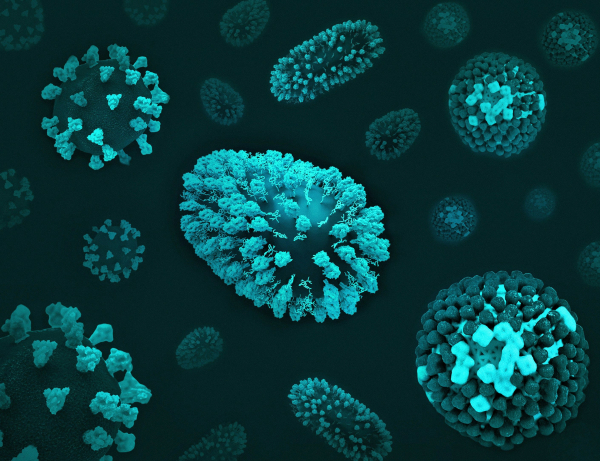
New discovery in Shark Bay sheds light on the evolution of life / Unsplash / National Institute of Allergy and Infectious Diseases
Scientists have discovered unique microbial communities in the coastal waters of Western Australia that have existed for billions of years, a new discovery that could help us understand how complex life on Earth emerged.
Stromatolites are found on the coast of Shark Bay – structures that look like rocks, but are actually living ecosystems of microorganisms. They are considered a kind of “windows into the past”, because similar formations existed on Earth billions of years ago and could have played a key role in the formation of an oxygen-rich atmosphere. This is reported by Science alert .
How do microbes from Shark Bay help explain the evolution of life?
It was here that researchers focused on finding ancient microbes – archaea of the Asgard group. These organisms are believed to be the closest relatives of eukaryotes – the cells that make up plants, animals and humans. According to one hypothesis, complex life arose as a result of close interactions between archaea and bacteria.
In a new study published in Current Biology, scientists were able to grow these microorganisms in the lab using samples from Shark Bay's microbial mats, something only a handful of scientific groups in the world have managed to do.
Using DNA analysis and artificial intelligence modeling, the researchers found that archaea coexist with sulfate-consuming bacteria, exchanging nutrients, suggesting a form of cooperation between different species.
According to Yahoo news , the most important discovery was made thanks to electron cryotomography , a method that allows you to see cell structures at the nanometer level. For the first time, scientists were able to directly record the interaction of archaea and bacteria. Thin nanotubes were discovered between them, through which metabolism probably took place.
This could be a model for how the first complex cells arose on early Earth . Such an interaction could have been a crucial step in the transition from simple organisms to eukaryotes.
The new archaea species has been named Nerearchaeum marumarumayae . The name was chosen in collaboration with the indigenous Malgana people, who have inhabited the region for over 30,000 years. The word marumarumayae means “ancient home” and emphasizes the connection between the microorganisms and ancient stromatolites.
At the same time, the Shark Bay ecosystem is under threat from climate change, including rising temperatures, storms and human impact. Scientists emphasize the importance of preserving this unique place, which holds keys to understanding the evolution of life on Earth.