
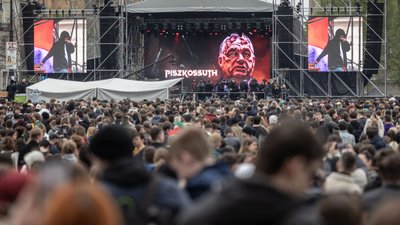
More than 100,000 people gathered in the Hungarian capital Budapest for a massive protest concert against the government of Prime Minister Viktor Orban. The event, held two days before parliamentary elections, was a call for citizens to go to the polls and vote for a change of government.
The Associated Press writes about this.
The mass concert, which took place in Budapest's Heroes' Square and lasted about seven hours, featured more than 50 bands and artists, each performing one song. Organizers called the event a “system hack” and said each performance had a critical message about the government.
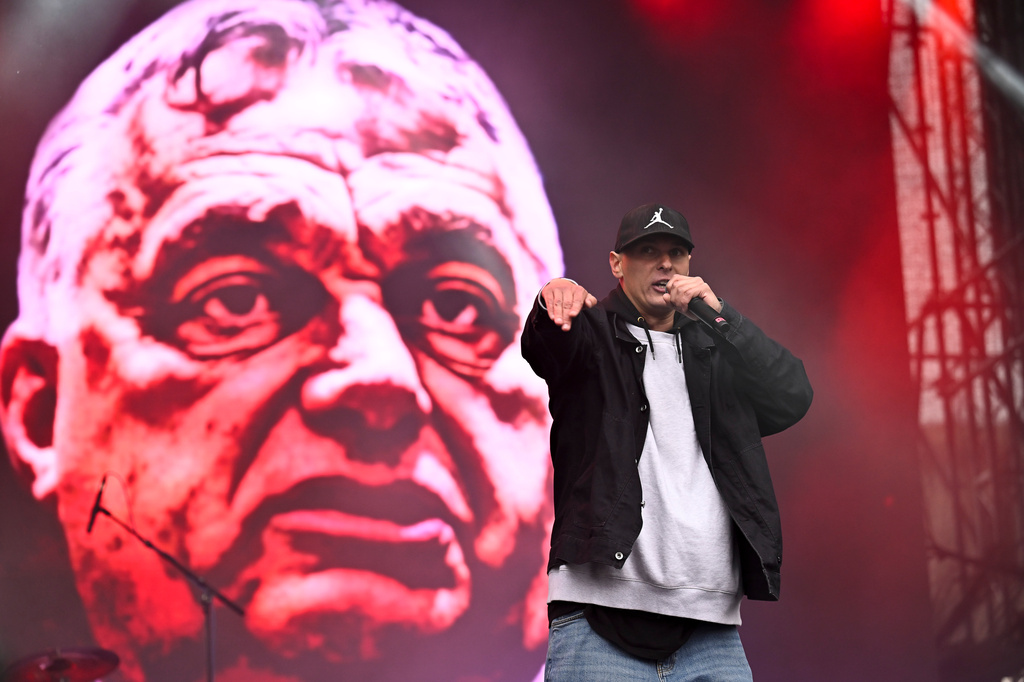 A rap duo called “Fekete Kobra” performs during an anti-government concert featuring dozens of the country's most popular artists, in Budapest, Hungary, Friday, April 10, 2026. AP/Denes Erdos
The crowd, mostly young, chanted anti-government slogans, including “Ruszkik haza!” (“Russians, go home!”), a slogan that dates back to the Hungarian Revolution of 1956. Now, the slogan has regained popularity amid the Hungarian government's rapprochement with Moscow.
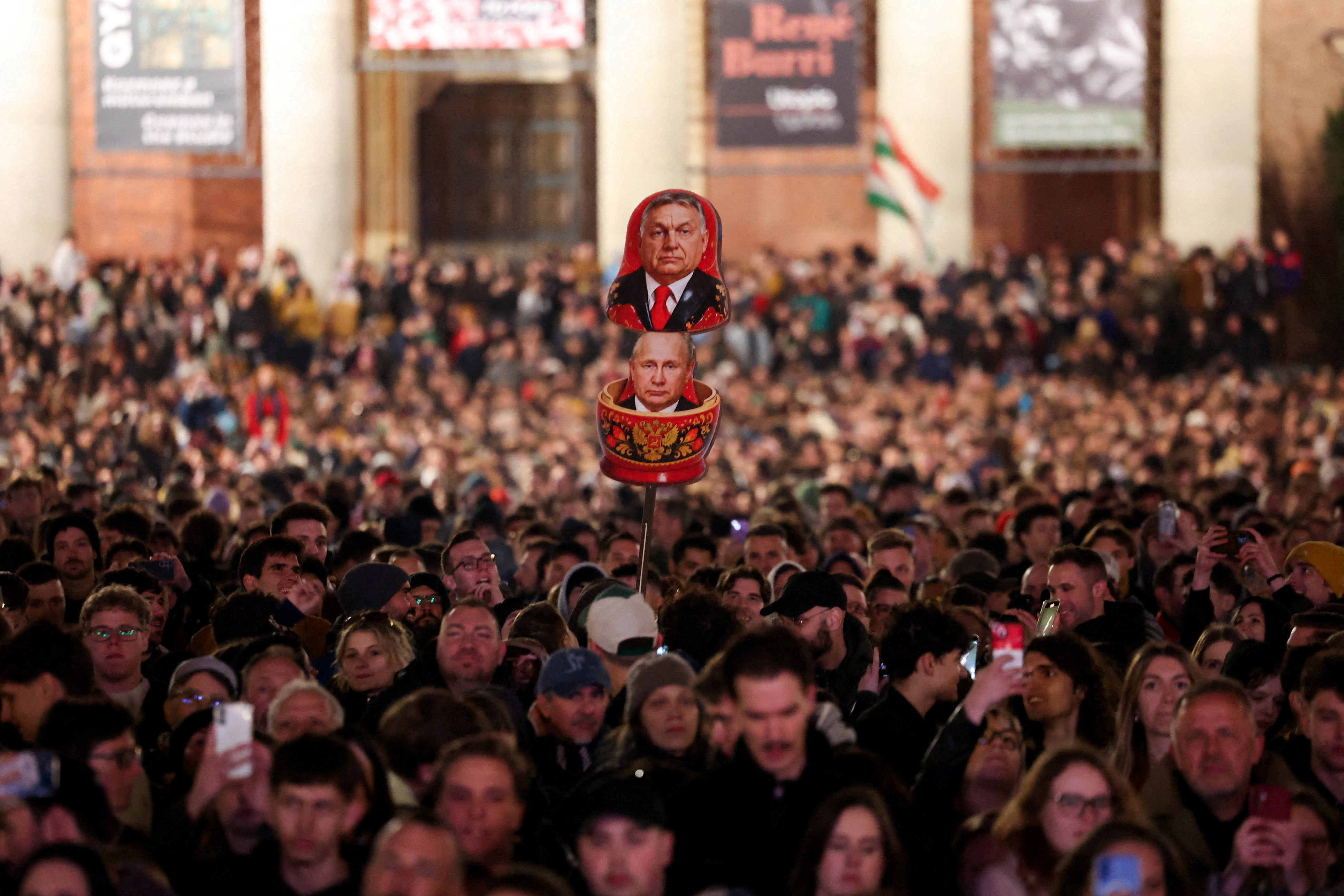 A man holds a poster depicting Hungarian Prime Minister Viktor Orban and Russian President Vladimir Putin as nesting dolls during a free concert in Heroes' Square in Budapest, Hungary, April 10, 2026. REUTERS/Bernadett Szabo
According to participants, the main goal of the event was to demonstrate the scale of dissatisfaction with the current government. Many of those present said they wanted change in the country and an end to Orbán's long-standing rule.
The concert was organized by the civil society movement “Civil Resistance Movement.” Activists noted that the musicians' performances are intended to show voters that “the era of impunity is ending” and to urge citizens to come to the polls.
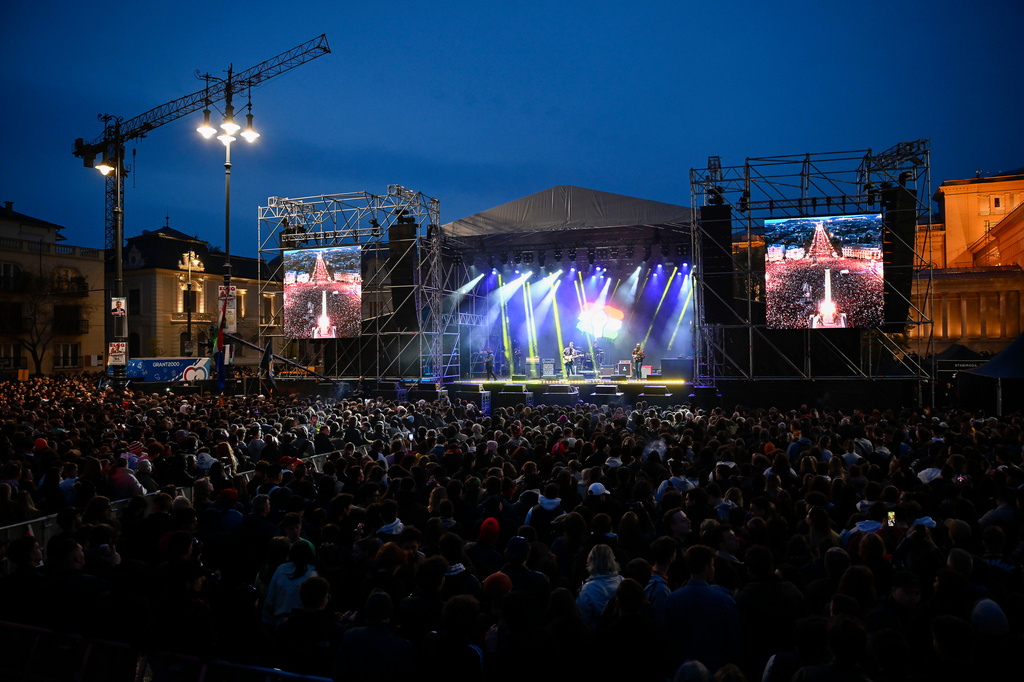 The band “Galaxisok” performs during an anti-government concert featuring dozens of the country's most popular artists, in Budapest, Hungary, Friday, April 10, 2026. AP/Denes Erdos
The event also attracted a large online audience, with over 100,000 people watching the live broadcast. The massive turnout, especially among young people, reflects a growing generational divide in Hungarian society, with young voters increasingly speaking out against Orbán’s policies.
The prime minister's main opponent in the election is considered to be the leader of the Tisza party, Peter Magyar. His political force is gaining popularity against the backdrop of economic difficulties, corruption scandals, and Orban's long stay in power.
According to opinion polls, among voters under 30, support for the Tisza party significantly exceeds the rating of the ruling Fidesz party, making the upcoming elections one of the most tense in recent years.
For the first time in 16 years of continuous premiership, Viktor Orban may lose power. Independent pre-election polls in recent months have shown a steady advantage for the opposition party “Tisa” led by Peter Magyar. On the eve of the elections, the Suspilny team arrived in Hungary – despite warnings from the Ukrainian Foreign Ministry to refrain from visits to this country amid growing tensions in relations.