
Main points
- The Orion spacecraft successfully completed a maneuver that put it on a trajectory to the Moon.
- The astronauts will spend the next few days traveling to the satellite, after which its gravity will guide the capsule back to Earth.
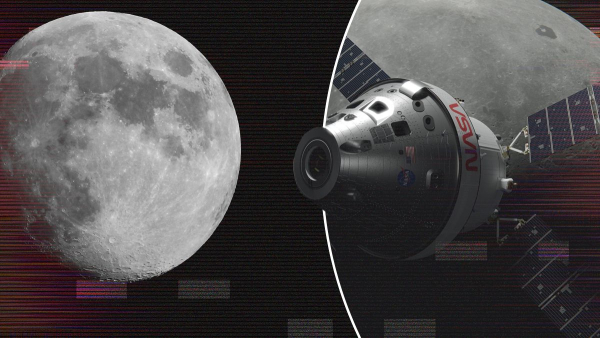
Four astronauts begin historic journey around the Moon / Collage Channel 24/Freepik/NASA
The Orion spacecraft has officially left Earth's orbit after successfully firing its main engine. The four daredevils became the first humans in fifty years to set foot on the moon. The maneuver was a pivotal moment that would determine the fate of the entire mission.
What stage of flight is Orion currently in?
To begin the journey, the crew fired Orion's main engine for 5 minutes and 50 seconds, performing a so-called TLI maneuver – translunar injection. This firing was the final big boost that put the spacecraft on a free-return trajectory. Now the crew is inevitably heading for the Moon, and the only way back will be through a flyby of our natural satellite using its gravity, Live Science writes.
Before the start of the maneuver, Christina Koch noted that with this step, humanity is not leaving the Earth, but choosing its development, since this impulse actually determines the entire further trajectory until landing.
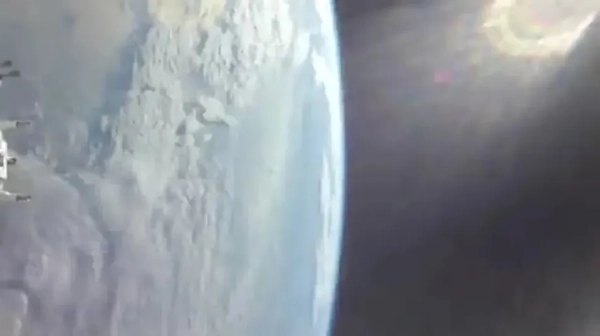
View from the Orion capsule / NASA photo
The engine that powered this historic leap has a rich history—it was borrowed from the space shuttle program and upgraded for Artemis. It has already been to space 19 times on three different shuttles, Space reports. Its power is impressive: 2,722 kilograms of thrust would allow a conventional car to accelerate from zero to 97 kilometers per hour in just 2.7 seconds.
Orion is crewed by Commander Reed Wiseman, Pilot Victor Glover, Mission Specialist Christina Koch, and Canadian Space Agency Astronaut Jeremy Hansen. The crew is already setting records:
- Koch became the first woman to leave low Earth orbit.
- Glover is the first black person.
- Hansen is the first non-American on such an expedition.
- In addition, during the flight they plan to break the record for distance from Earth, set by the Apollo 13 astronauts, who traveled 400,171 kilometers from our planet.
NASA talks in detail about the Artemis 2 mission: watch the video in English
The first day of the flight, which began Wednesday after the launch of the Space Launch System rocket, was filled with critical tests.
- Victor Glover conducted a close-range maneuvering demonstration, controlling the ship with the help of 24 jet control system engines, reports Ars Technica. He brought Orion to a distance of just a few dozen meters from the upper stage of the rocket, performing turns, tilts and movements in different planes. According to the pilot, the ship obeyed the controls even better than expected. These tests are extremely important for future missions, such as Artemis III, where Orion will have to dock with SpaceX or Blue Origin landing modules in low-Earth orbit.
- The life support systems have also been tested. The carbon dioxide air purifiers are working flawlessly, ensuring a stable atmosphere in the cabin.
There were also some minor technical hiccups: there was a small problem with the space toilet. While preparing the pump for operation, not enough water was introduced, which caused the system to not respond. However, after adding liquid, everything worked normally.
What awaits astronauts next?
The crew's schedule will now be less hectic as they approach the moon. On Monday, the sixth day of the mission, a flyby is planned. During this maneuver, the astronauts will see about 20 percent of the far side of the moon, illuminated by the sun. They plan to take lots of photos and videos, for which they were all given iPhone 17 Pro Max.
The moon's gravity will then slingshot the spacecraft back to Earth. The return home is scheduled for Friday, April 10, when the capsule is scheduled to splash down in the Pacific Ocean near San Diego.
The success of Artemis II will open the door to landing humans on the lunar surface, which could happen as early as 2028 during the Artemis IV mission.