
Main points
- Magnit, one of Russia's largest retailers, has suffered losses of over 22 billion rubles for the first time in 20 years due to expensive loans and customer savings.
- The financial collapse of the largest retailer is not an accident, but a diagnosis for the entire Russian economy, because Lukoil, Severstal, and Rusal also have similar problems.
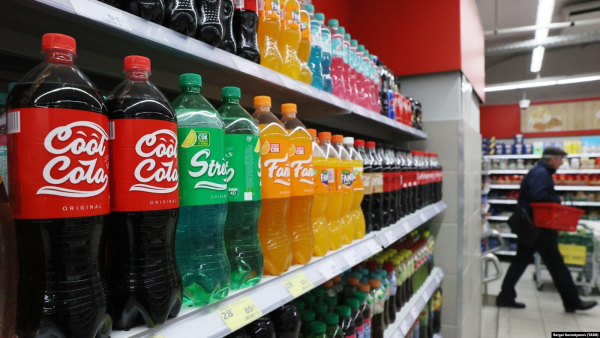
The largest supermarket chain went into the red for the first time in 20 years / Russian media
One of Russia's largest retailers, Magnit, has been in the red for the first time in two decades, suffering losses of over 22 billion rubles. By the end of 2025, the company had effectively collapsed.
Why did Magnit become unprofitable in Russia?
The chain has over 32,000 retail outlets and previously grew steadily, but in 2025 it reported a loss of 22.5 billion rubles, RBC-Ukraine writes.
The financial failure became known from the reporting of the key structure of the group – JSC “Tander”, which manages the stores “Magnit” and “Magnit Cosmetics”.
At first glance, sales even increased – revenue grew by about 11% and exceeded 3 trillion rubles. But this money was simply “eaten up” by expenses:
- The biggest hit is loans. Due to the high key rate in Russia, debt servicing has become much more expensive: costs have jumped by almost three quarters. Virtually all profits have gone to payments to banks.
- The second reason is the savings of buyers. Russians choose the cheapest products and cut costs. In order not to lose customers, Magnit kept prices at a minimum, but this hit the profitability of the business hard.
By the way, the story of Magnit is not an isolated case. Other large Russian companies, including Lukoil, Severstal, and Rusal, have found themselves in a similar situation. High interest rates and a general economic downturn are gradually “suffocating” even the largest businesses.
Analysts say that if even grocery chains start to operate in the red, it's a signal of serious problems in the entire economy. And it's no longer possible to hide them behind revenue growth.
What is the situation in the Russian economy and what is known about the budget deficit?
Russia's budget deficit in the first 2 months of 2026 widened to 3.45 trillion rubles, or 1.5% of GDP, almost reaching the annual forecast, The Moscow Times reports.
Interestingly, economist Ivan Us told Channel 24 that late last year the Russian government reported that the budget deficit was supposedly 5.7 trillion rubles. However, the former first deputy head of the Central Bank of Russia stated that the real deficit was actually somewhere around 8 trillion.
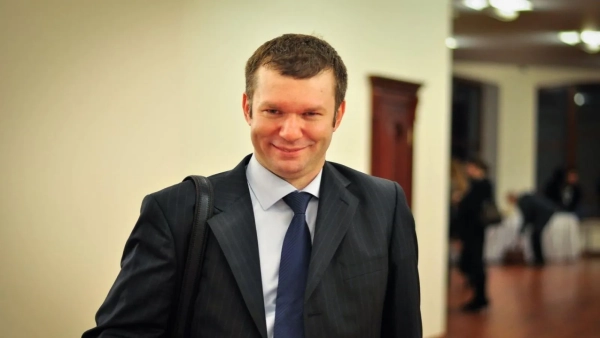
Ivan Us
Chief Consultant, Center for Foreign Policy Studies, National Institute for Strategic Studies
The thing is that the Russians postponed certain expenses from 2025 to 2026. And such a significant deficit in 2 months of 2026 is the reason for this.
Us explains that the Russians believed they could cover the deficit with oil and gas revenues. In addition, Us names another factor that negatively affects Russia's deficit coverage. This is the strong ruble exchange rate.
Economist Oleg Getman adds for Channel 24 that the most critical factor for their deficit both this year and last year is the price of energy resources, and primarily oil.

Oleg Getman
Coordinator of expert groups of the Economic Expert Platform
For two months of 2026, the world price of Brent crude oil was at $60 per barrel, and accordingly, the Russian Urals brand could be around $40 per barrel, which is quite close to the cost price. And if this situation had lasted until the end of the year, the consequences for Russia would have been critical.
- Overall, the Russian government expected the final budget deficit this year to be up to 3.8 trillion rubles, or 1.6% of GDP, due to tax increases.
- But this was hindered by real oil prices, the ruble exchange rate, and economic dynamics, which do not correspond to the indicators that were set in the draft budget.
- Thus, in January, Russia earned $9.5 billion from the export of crude oil and petroleum products. This is $1.5 billion less than in January, according to Bloomberg data.
Work, meetings, trips to nature – from now on you don't have to choose between a representative appearance and power, because with the Škoda Superb you choose all this plus the most important thing – comfort and safety for every member of your family. This flagship crossover combines the most modern driver assistance systems, high power and a carefully thought-out interior. The model is equipped with LED headlights, Side Assist and all-wheel drive to pave the way for yourself and your loved ones to where new discoveries await you.
Business problems in Russia
-
In 2025, VkusVill closed 286 stores in Russia, reducing the total number by 12.7% to 1,973 points, which is explained by the optimization and acceleration of delivery.
-
The number of stores in Russia has decreased for the first time since 2000 due to rising taxes and increased competition. This applies to all retail outlets – from grocery stores near the house, supermarkets and fruit stands to communication salons and clothing stores.
-
Seven fashion brands, including Turkish and Kazakh companies, left the Russian market in the first quarter of 2026. Economic realities, the demographic crisis, and competition with “gray” imports are affecting the market, leading retailers to abandon expansion.