
Main points
- Global airlines are raising fares as rising oil prices threaten the industry's record profits.
- A war in the Middle East could lead to fuel shortages, which would complicate the situation for airlines and the global economy.
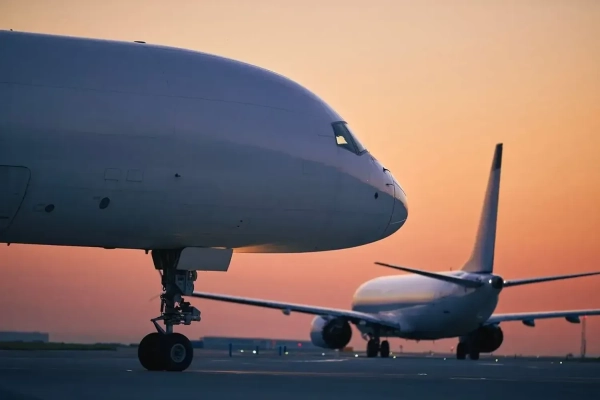
Airline market on edge due to fuel crisis / Depositphotos
Global airlines have begun raising fares and cutting capacity to cope with the sudden rise in oil prices, but there is a risk that the industry could be “extinct” by the time of war in the Middle East.
What is happening to air travel amid the war in Iran?
The profitability of the airline industry may depend on whether consumers abandon flights, writes Reuters.
Before the US-Israeli conflict with Iran, the aviation industry was forecasting record profits of $41 billion in 2026, but doubling jet fuel prices have put that at risk and forced carriers to rethink their networks and strategies.
Carriers ranging from United Airlines to Air New Zealand have announced capacity cuts and price increases, while others have implemented fuel surcharges.
Airlines face an existential challenge. They will have to lower fares to stimulate weakening demand, while higher fuel costs will encourage them to raise fares. A perfect storm,
– said the former head of Olympic Airways Rigas Doganis.
Mass flight cancellations: what is known?
Mass flight cancellations have begun around the world amid a sharp rise in aviation fuel prices, The Telegraph reports.
According to data from analytics company Cirium, about 7% of all scheduled flights were canceled in one of the last days – that's more than 7,000 departures. The reason is a sharp jump in fuel prices after the aggravation of the situation in the Middle East:
- The cost of aviation kerosene increased from $742 to $1,710 per ton.
- At the same time, Brent oil rose to $116 per barrel.
Meanwhile, aviation market analyst Alex Macheras warns that ” a serious shortage of jet fuel could arise in less than a week ” in a number of regions, including major European hubs. According to him, airports are already notifying airlines of a possible “no fuel” scenario:
- Air New Zealand to cut 1,100 flights by May;
- SAS – about 1,000 next month;
- Vietnam Airlines is considering cutting up to 20% of flights each month if prices continue to rise;
- In the US, United Airlines has already cut about 5% of its less profitable routes.
How will airline ticket prices increase?
Last week, ABC News reported that airlines would have to raise fares by 20% to cover higher fuel costs.
- For example, Hong Kong-based Cathay Pacific Airways has eliminated fuel surcharges twice in the past month, and will soon be charging a fuel surcharge of $800 for a round trip from Sydney to London. Before the conflict with Iran, a return economy ticket on this route would normally cost around A$2,000 ($1,369.60).
- Low-cost carriers may face the greatest difficulties , given that their passengers are more price-sensitive than corporate clients and affluent consumers, who are increasingly targeted by premium competitors such as Delta Air Lines and United Airlines.
Will the world experience a fuel shortage due to the war in the Middle East?
Oil prices are unlikely to return to pre-war levels anytime soon. Fuel shortages are already spreading in Asia and could reach Europe by April, executives from the world's largest oil and gas companies said at the CERAWeek conference in Houston, CNBC reports.
Sheikh Nawaf al-Sabah, head of the Kuwait Petroleum Corporation, said that Iran has effectively imposed an economic blockade on oil-producing countries in the Middle East by closing the Strait of Hormuz, a key artery through which oil exports from the Persian Gulf countries to world markets pass.
This is an attack not only on the Gulf, but also on holding the global economy hostage,
– said al-Sabah.
He warned that the war could have a “domino effect” on the entire global economy.
Analysts are comparing the current situation to the 1973 oil crisis and calling it one of the most serious in decades. One expert said the situation is “extremely dangerous” because Iran effectively controls the Strait of Hormuz.
Experts warn that the conflict could escalate, and the economies of the Persian Gulf countries – in particular Qatar, the UAE, Iraq, and Saudi Arabia – could lose up to 30% of their GDP.
Latest news about the US-Iran conflict
-
Spain has closed its airspace to US planes attacking Iran and refused to grant access to joint military bases. Prime Minister Pedro Sanchez has criticized US and Israeli strikes on Iran, and US President Donald Trump has threatened to cut trade with Spain.
-
The American leader threatens Iran with strikes on power plants and oil wells if the Strait of Hormuz is not opened. At the same time, Washington continues to claim successful negotiations.
-
Iran receives Russian assistance and uses it to launch strikes on American bases. They also exhaust the air defenses of the Persian Gulf countries using missiles that do not carry warheads.
-
The US has not yet achieved the desired results in the conflict with Iran, and its partners in the Middle East have become hostages to this. China looks like a moderate player, it has solved its oil supply problems and now wants to embarrass the US for as long as possible.