
Main points
- The 770 kg great white shark Contender has been spotted again off the coast of Florida thanks to a satellite transmitter installed by Ocearch.
- Researchers are tracking the shark's movements to study its migration routes and possible reproductive habits as part of an assessment of ocean health.
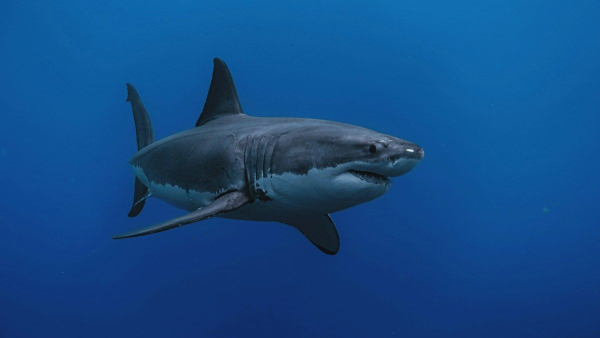
The largest white shark in the Atlantic has returned to the coast of Florida after a year of wandering / Unsplash
A great white shark named Contender, which researchers say is the largest white shark ever seen in the Atlantic Ocean, has reappeared off the coast of Florida. The 1,600-pound, 14-foot-long predator spent a year traveling the ocean. Now, scientists hope to learn more about it.
How did scientists track the movement of a giant shark?
An eight-year-old male great white shark was spotted by a satellite transmitter in January 2025 near the Florida-Georgia border. Ocearch, an organization that studies ocean predators, installed a special SPOT device on the Contender, which allows it to track the shark's movements in real time for five years, writes Indian Defense Review.
According to researchers, the shark traveled one of the longest routes ever recorded for a white shark in the Atlantic. From the coast of Florida, Contender headed north, reaching the Gulf of St. Lawrence in Canada, and then returned to the warm southern waters off the U.S. During its migration, the shark was recorded off the coast of New Jersey, Massachusetts and North Carolina.
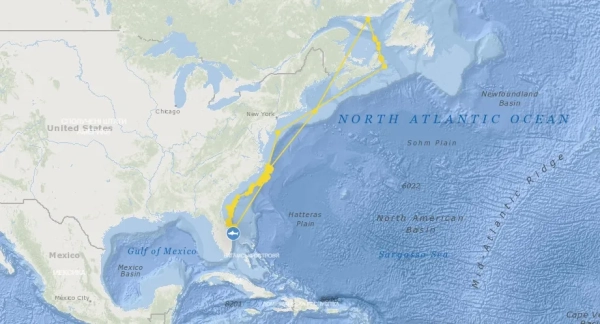
The path that the Contender overcame / Screenshot of Channel 24
Satellite data shows a clear seasonal pattern in the predator's behavior. In the summer, the Contender moves north in search of cooler waters, and in the winter, it returns south, likely to breed or hunt for prey.
Why are they following a shark?
Ocearch says the information gained from tracking Contender will help scientists better understand great white shark migration patterns and behavior. Of particular interest to scientists is the opportunity to learn more about the reproductive habits of these animals, which remain one of the greatest mysteries in marine biology.
Christopher Fisher, founder of Ocearch, explained that great white sharks rarely mate when people are around, so scientists are having to piece together information piecemeal. According to the researcher, the available data indicates that the region of Florida and the surrounding southeastern waters should be the most attention in late winter and early spring. This is when adults may gather to breed.
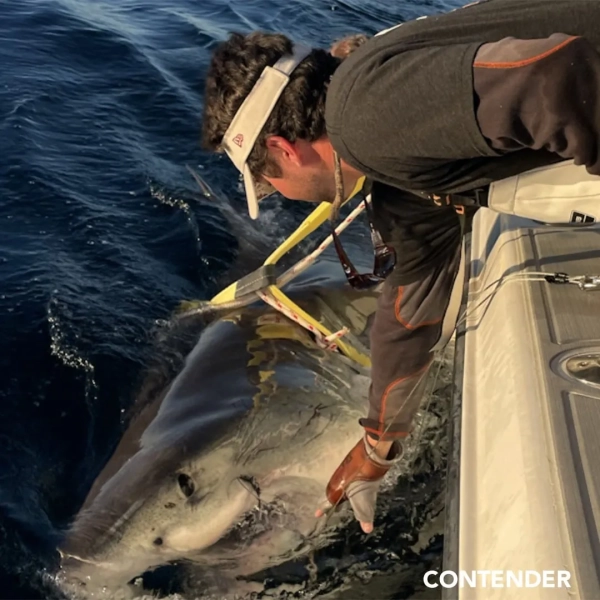
The moment researchers caught Contender. Presumably, at this time they attached a beacon to it to track its movements / Photo by Ocearch
Over the next two to three months, the Ocearch team plans to closely monitor Contender's movements to see if he interacts with other known sharks that have also been spotted before. These include the male Breton and the female Goodall, who were also tracked in the same region. Each signal from the satellite transmitter could be an important piece of the puzzle that will help determine whether white sharks use certain coastal areas as places for adult gatherings.
Sharks are indicators of the state of the ocean
Great white sharks like Contender are important indicators of ocean health. Tracking their movements across thousands of kilometers across diverse ecosystems provides valuable information about how environmental changes are affecting these marine predators. Rising water temperatures, shifting prey migration routes, and other factors can significantly impact the behavior and survival of these animals.
Fisher stressed that the most important question is whether other adult white sharks, both male and female, will be in the same region at the same time. Such encounters could support the hypothesis that sharks congregate in certain coastal areas at predictable times of the year.
The Ocearch team plans to carefully analyze the data over the coming months, combining satellite tracking with biological sampling, to determine whether Contender's presence in Florida waters coincides with a period of active reproductive activity.