
Main points
- Carl Sagan claimed that the universe is indifferent to man and was not created for him.
- Modern cosmology shows that the parameters of the Universe are extremely precise for the emergence of life, but even minor changes could make it impossible.
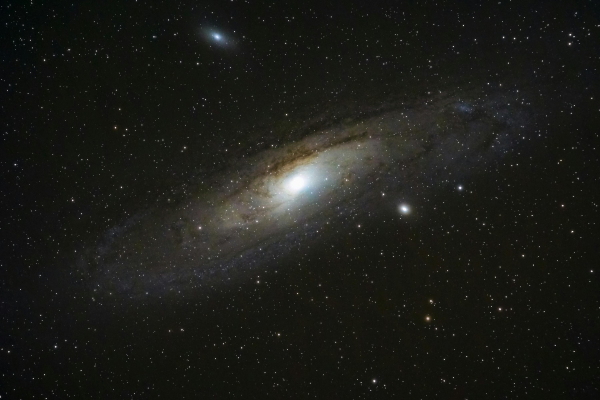
Sagan's Idea and Science: How Coincidences Shaped Our Universe / Unsplash / Bryan Goff
Carl Sagan claimed that the universe is indifferent to humans. Modern cosmology shows an even deeper picture: even minor changes in its parameters could make the existence of humanity impossible.
Carl Sagan insists: the universe was not created for man and has no special attitude towards him. It lives by its own laws – stars are born, galaxies are formed, and planets are destroyed regardless of whether humanity exists. Econews writes about this.
Why is the Universe both indifferent and “tuned” for life?
He popularized this idea through Cosmos, explaining complex scientific concepts in simple language. For him, it was fundamental that science should be based on evidence , not on convenient human ideas.
However, modern space exploration adds an important nuance to this picture. Although the universe was not “made” for humans, its parameters have turned out to be extremely precise for the emergence of life.
According to modern estimates, the universe began about 13.8 billion years ago after the Big Bang . It was initially filled with matter, antimatter, and radiation. Over time, a small excess of matter formed, which allowed stars, galaxies, and eventually life to form.
If this balance were perfect , matter and antimatter would completely annihilate each other. In such a universe, neither stars nor planets would form.
Another critical factor is the initial “unevenness” in the distribution of matter . If the universe were perfectly uniform, gravity would not be able to form structures. Without these tiny deviations, galaxies, and therefore life, would not have appeared.
As Forbes writes, the balance between the expansion of the universe and the force of gravity was equally important. If the density of matter changed even by a tiny amount, two scenarios were possible: either the universe would quickly contract back, or it would expand so fast that atoms could not form.
Dark matter also plays a key role. It is essentially the “framework” for galaxies , holding them together. Without it, stars would not be able to form stable systems, and planets and complex chemistry would not arise.
The nature of dark energy is also not fully understood. If its properties were different, the universe could either collapse or contract again, which would also rule out the emergence of life.
As a result, science comes to a paradoxical conclusion. The universe, which Sagan spoke of as indifferent, is at the same time extremely ” sensitive ” to its initial conditions. Even minor changes in the fundamental parameters could make human existence impossible.
Sagan himself emphasized something else: despite this cosmic randomness, humans have a unique ability to understand the Universe. And at the same time, they bear responsibility for their planet, which remains the only known place for life.